


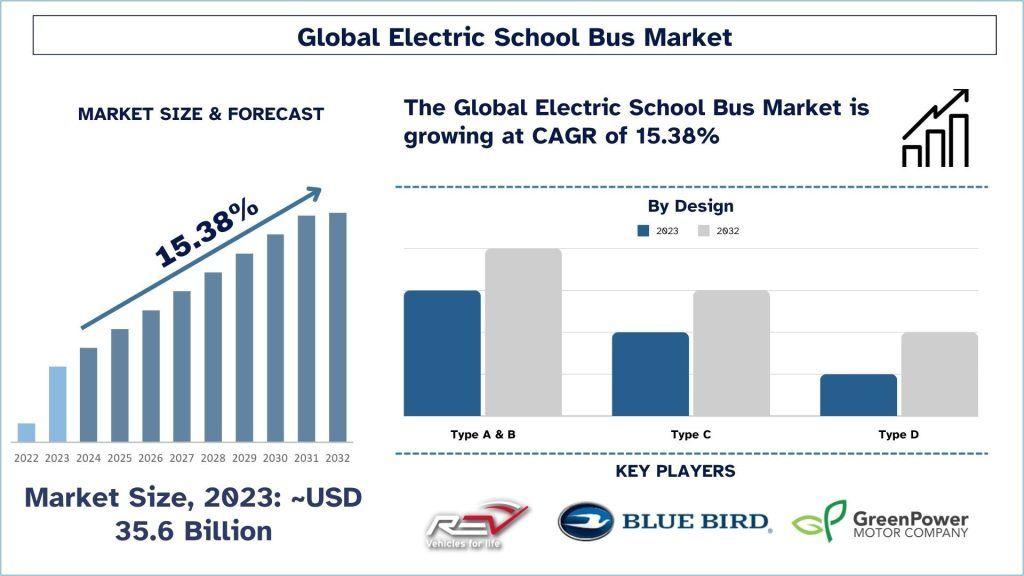
According to UnivDatos, electric school buses typically deliver a lower total cost of ownership than their diesel counterparts. Reduced fuel consumption, minimal maintenance requirements, and fewer mechanical repairs contribute to long-term operational savings. At the same time, improvements in battery technology, charging infrastructure, and vehicle range have made electric school buses a far more practical and scalable solution for school transportation systems.
The Electric School Bus Market was valued at USD 35.6 billion in 2023 and is projected to expand at a CAGR of 15.38% between 2024 and 2032, reaching USD billion by 2032, reflecting accelerating adoption worldwide.
Langs Bus Lines: Advancing Fleet Electrification in Canada
Langs Bus Lines, a family-owned student transportation provider based in Southwestern Ontario, is preparing to implement one of Canada’s largest electric school bus transitions. The company plans to deploy 200 electric school buses, a move that will significantly modernize its operations and reinforce national efforts to reduce transportation-related emissions.
This initiative places Langs Bus Lines at the forefront of sustainable student mobility in Canada, while aligning with broader North American goals to improve air quality and reduce greenhouse gas emissions in school communities.
Government Funding Enabling the Transition
The fleet transformation is being supported by substantial federal investment. Langs Bus Lines will receive over USD 22.2 million from the Canadian government through the Zero Emission Transit Fund (ZETF). In addition, the Canada Infrastructure Bank (CIB) has provided a USD 22.4 million loan to help bridge the cost gap between electric and diesel buses.
Access sample report (including graphs, charts, and figures): https://univdatos.com/reports/electric-school-bus-market?popup=report-enquiry
With this combined support, Langs Bus Lines—alongside Student Transportation—aims to replace nearly 50% of its diesel fleet by 2026, serving close to 9,000 students across communities including Sarnia, Strathroy, London, and Woodstock.
Infrastructure Development and Operational Planning
Fleet electrification extends beyond vehicle procurement. To support daily operations, Langs Bus Lines must install charging systems and upgrade electrical infrastructure at five operational sites throughout Southwestern Ontario. Recognizing the complexity of this transition, part of the ZETF funding has been allocated to a comprehensive feasibility study, focused on infrastructure readiness, energy demand planning, and long-term fleet optimization.
Environmental and Health Benefits
The shift to electric school buses is expected to deliver meaningful environmental gains. Langs Bus Lines anticipates an annual reduction of over 4,200 tonnes of greenhouse gas emissions, an impact comparable to eliminating the yearly energy use of approximately 550 households.
In addition to lowering emissions, electric buses eliminate diesel exhaust—an air pollutant linked to asthma and other respiratory conditions in children. Given the extensive mileage accumulated by school buses each year, this transition will substantially improve air quality around schools and residential areas, while also providing quieter and more comfortable rides for students.
This initiative directly supports Canada’s 2050 net-zero emissions target and underscores the growing emphasis on clean transportation solutions nationwide.
Part of a Wider North American Shift
Langs Bus Lines’ initiative reflects a broader transition occurring across North America. In the United States, federal investments exceeding USD 1 billion under the Bipartisan Infrastructure Law are accelerating electric school bus adoption through programs such as the EPA’s Clean School Bus Program.
Several regions are moving even faster. For instance, New York State has mandated that all newly purchased school buses must be electric by 2027, signaling a strong policy-driven push toward fleet electrification. Public transit agencies are also embracing electric mobility, reinforcing the trend across multiple transportation sectors.
Challenges and Market Momentum
Despite strong growth, electric school buses still face barriers. The average cost of an electric bus—approximately USD 350,000—remains significantly higher than that of a diesel bus, which typically costs around USD 100,000. However, falling battery prices, fuel savings, reduced maintenance costs, and government incentives are steadily improving the economic case.
Click here to view the Report Description & TOC: https://univdatos.com/reports/electric-school-bus-market
Infrastructure constraints, including grid capacity and charger availability, also require careful planning. Even so, continued technological advancements and policy support are expected to accelerate adoption.
By the end of 2023, more than 12,000 electric school buses were already operating across North America, with deployment projected to rise sharply over the coming decade.
Market Outlook and Conclusion
From a market perspective, electric school buses are increasingly viewed as a cost-effective and sustainable alternative to diesel fleets. Ongoing improvements in battery performance, charging speed, and operational range are making electrification viable for a wider range of school districts.
Langs Bus Lines’ transition represents a pivotal moment for Canada’s student transportation sector. Backed by public funding and long-term financing, the project highlights how strategic collaboration can modernize essential services, reduce emissions, and protect public health.
As regulatory support strengthens and technology continues to mature, electric school buses are set to move from early adoption to mainstream deployment—delivering cleaner air, healthier communities, and a more sustainable future for students across generations.
Contact Us:
UnivDatos
Contact Number - +1 978 733 0253
Email - contact@univdatos.com
Website - www.univdatos.com
Linkedin- https://www.linkedin.com/company/univ-datos-market-insight/mycompany/

 English
 Arabic
 French
 Spanish
 Portuguese
 Deutsch
 Turkish
 Dutch
Dutch
 Italiano
 Romaian
 Portuguese (Brazil)
 Greek
Greek