


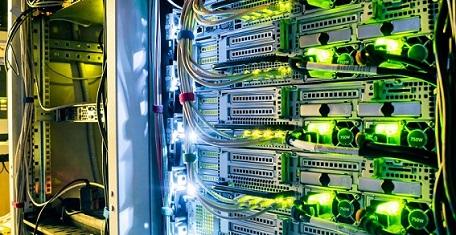
France is rapidly cementing its position as a premier digital hub within Europe, with a data center industry that is experiencing a period of unprecedented expansion and sophistication. The burgeoning France Data Center industry has become the critical infrastructure underpinning the nation's digital economy, supporting everything from cloud computing and AI development to e-commerce and the digital transformation of its traditional industries. This growth is strategically centered around key metropolitan areas, with Paris and its surrounding Île-de-France region serving as the primary hub, complemented by emerging secondary markets in Marseille and Lyon. Marseille, in particular, has risen to prominence as a crucial gateway, leveraging its unique geographical position as a landing point for major subsea cables connecting Europe to Africa, the Middle East, and Asia. This has transformed the city into a vital interconnection point, attracting significant investment from global content delivery networks and cloud providers seeking low-latency routes to these burgeoning markets. The industry's development is a direct reflection of France's ambition to achieve "digital sovereignty" and to play a leading role in Europe's technological future, attracting significant international investment while nurturing a strong domestic ecosystem.
The structure of the French data center industry is a dynamic mix of global hyperscalers, large colocation providers, and specialized domestic players. The global cloud giants—Amazon Web Services (AWS), Microsoft Azure, and Google Cloud—have made massive investments in the country, establishing multiple "cloud regions" to serve the growing demand for their services while complying with data residency requirements. These hyperscale facilities are immense, power-intensive campuses designed for maximum efficiency and scalability. Alongside them, major international colocation providers like Equinix, Digital Realty, and Interxion (a Digital Realty company) operate a vast network of carrier-neutral data centers. These facilities act as digital marketplaces, providing secure space, power, cooling, and connectivity to a diverse range of customers, from enterprises and financial institutions to cloud and content providers. This colocation segment is the connective tissue of the industry, fostering rich ecosystems where businesses can directly interconnect with their partners, suppliers, and customers, creating a powerful network effect that attracts even more participants.
A key characteristic of the French data center industry is its strong emphasis on sustainability and energy efficiency, a focus driven by both government policy and corporate responsibility initiatives. France's energy mix, which is dominated by low-carbon nuclear power, provides an immediate advantage, allowing data center operators to offer services with a significantly lower carbon footprint compared to other European markets that are more reliant on fossil fuels. This has become a major selling point for attracting environmentally conscious international clients. The industry is also at the forefront of implementing innovative cooling technologies, such as free-air cooling and liquid cooling, to reduce energy consumption. There is a growing trend towards exploring waste heat recovery, where the significant amount of heat generated by the data centers is captured and repurposed to heat nearby residential buildings or commercial facilities, transforming a waste product into a valuable resource and further integrating these digital factories into the local community and circular economy.
The industry is also deeply influenced by a robust regulatory framework and a government that is actively promoting digital investment. The French government's "Cloud au Centre" (Cloud at the Center) strategy aims to accelerate the adoption of cloud technologies by public sector entities, creating a significant source of demand for data center services. At the same time, stringent data protection regulations, both at the national level and under the EU's General Data Protection Regulation (GDPR), have created a strong impetus for data localization. This means that companies operating in France or serving French customers often need to store their data within the country's borders, directly fueling the demand for local data center capacity. This combination of government-led demand, a clear commitment to digital sovereignty, and a stable regulatory environment makes France a highly attractive and secure location for long-term data center investment, underpinning the industry's continued growth and strategic importance.
Explore More Like This in Our Regional Reports:

 English
 Arabic
 French
 Portuguese
 Deutsch
 Turkish
 Dutch
Dutch
 Italiano
 Russian
 Romaian
 Portuguese (Brazil)
 Greek
Greek