


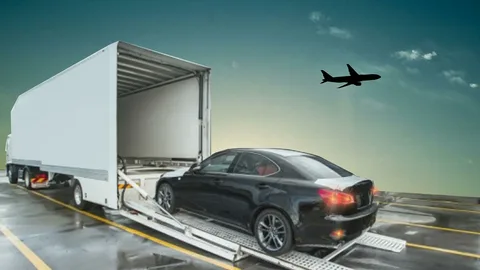
When you first begin researching how to move a vehicle from one place to another, you will quickly encounter the term automobile shipping quotes. It sounds straightforward enough. You provide some basic information about your car, your route, and your timeline, and in return you receive a number that tells you what to expect. But anyone who has gone through this process more than once will tell you that the reality is far more nuanced. Two different quotes for the exact same car on the exact same route can look nothing alike. Some arrive packed with detail and clarity while others feel vague and rushed. Understanding what makes a quote reliable, what factors cause numbers to shift, and how to separate meaningful information from empty promises is the key to a smooth shipping experience. This article pulls back the curtain on everything you need to know before you ask for that first estimate.
Why No Two Quotes Ever Look the Same
Imagine two neighbors who both own the same model of sedan. They both need to send their cars from Denver to Dallas. They request information on the same Tuesday morning. Yet the numbers they receive differ by a noticeable margin. How can this happen? The answer lies in the complex, real-time nature of the car moving industry. Carriers operate on constantly shifting networks. One truck may have just dropped off a load in Denver and is eager to find cargo heading south toward Texas, offering favorable terms to fill that space quickly. Another carrier may already have a nearly full trailer heading in a different direction, meaning they would have to go out of their way to accommodate the Dallas route. Weather in the mountain passes, construction on major highways, and even the day of the week all play a role. Rather than viewing variation as suspicious, smart shippers recognize it as a natural feature of a dynamic system.
The Information Exchange That Determines Everything
Automobile shipping quotes are only as good as the information they are built upon. When you provide your vehicle details, every word matters. A car described simply as a sedan might be interpreted as a compact four-door model when in reality you drive a full-size luxury sedan with an extended wheelbase. That difference affects how much space your car occupies on the trailer. A vehicle listed as running might start and drive, but if it has a transmission that slips or brakes that grab unevenly, the driver faces extra challenges during loading and unloading. Your pickup address carries enormous weight. A suburban home with a long driveway and easy street access is a completely different scenario from a downtown apartment building with no loading zone and a fire lane out front. The same applies to your delivery location. Being thorough and honest from the very first conversation ensures that the numbers you receive are numbers that can actually be honored when the truck arrives at your door.
Open Versus Enclosed Changes the Entire Conversation
One of the first distinctions you will notice when reviewing automobile shipping quotes is whether they refer to open or enclosed transport. Open transport is the familiar sight of several cars riding on a two-level uncovered trailer. This method is the workhorse of the industry, moving thousands of vehicles every single day along every major highway in the country. It is efficient, widely available, and represents the standard choice for most everyday drivers. Enclosed transport is a different world entirely. Your vehicle rides inside a covered trailer, protected from rain, dust, road debris, and direct sun. This is the preferred method for exotic sports cars, classic collectibles, and luxury vehicles where paint perfection is paramount. Because enclosed carriers hold fewer cars and require specialized equipment and insurance, the numbers you see for this service exist in their own category. Comparing an open quote to an enclosed quote directly is an exercise in frustration. Always confirm which type of service you are being quoted for before you make any judgments.
Timing Is a Lever You Can Actually Pull
The dates you provide when requesting a quote are not mere formalities. They actively shape the response you receive. A request that demands pickup within forty eight hours and guaranteed delivery by a specific Friday signals urgency. Carriers often need to reshuffle existing plans or leave paid space empty to accommodate such a tight window, and that flexibility is reflected in the number they return. On the other hand, a request that offers a pickup window of ten to fourteen days and a delivery window of several days on the other end gives carriers room to breathe. They can consolidate your vehicle with other shipments heading in the same direction, fill every inch of their trailer efficiently, and pass some of those operational savings along to you. If your schedule allows even a modest amount of flexibility, make that known when you ask for quotes. Patience remains one of the most powerful tools in your possession.
Reading Between the Lines of Every Estimate
The biggest mistake first time shippers make is staring only at the final number at the bottom of the page. While the total is certainly important, the real value lives in the details surrounding it. A quality quote explains what is included. Does it assume standard insurance coverage, and if so what are the limits? Is the service door to door, meaning the driver will navigate to your specific addresses, or does it assume you will drop off and pick up at a terminal? Are there clear explanations of what happens if the driver arrives and no one is there to meet them? What about rescheduling fees or waiting time? A quote that seems slightly higher but answers these questions clearly and transparently is almost always a better choice than a rock bottom number that leaves every important detail vague. You are not just paying for a car to move from one place to another. You are paying for reliability, communication, and peace of mind.
Seasonal Rhythms That Affect What You See
The time of year when you request automobile shipping quotes has a measurable impact on the numbers that come back to you. Summer is the peak season for vehicle moves. Families relocate during school vacations, military personnel receive their orders in warmer months, and college students move between semesters. During these months, trucks fill quickly and availability tightens on popular routes. Winter brings different challenges. Snow and ice on northern highways reduce driving speeds and can limit the number of drivers willing to accept certain routes, sometimes creating localized tightness. Spring and fall often offer the most balanced environment with reasonable availability and predictable conditions. If your move is flexible, requesting quotes during off peak periods or on weekdays rather than weekends can yield different results. Simply being aware of these natural rhythms helps you time your request strategically.
Knowledge Turns Uncertainty Into Confidence
Collecting automobile shipping quotes is not about finding a single number that looks smaller than all the others. That approach often leads to disappointment and frustration. The real goal is to gather enough clear, honest information to make a confident decision for your vehicle. A good quote leaves you feeling informed about what to expect, when to expect it, and how your car will be protected throughout the journey. It answers your questions before you have to ask them. When you receive that level of transparency, you have found something far more valuable than a discount. You have found a partner you can trust. And trusting that your car is in capable hands from the moment it is loaded until the moment it arrives at its destination is worth every bit of attention you put into understanding the process.

 English
 Arabic
 French
 Spanish
 Portuguese
 Deutsch
 Turkish
 Dutch
Dutch
 Italiano
 Romaian
 Portuguese (Brazil)
 Greek
Greek