


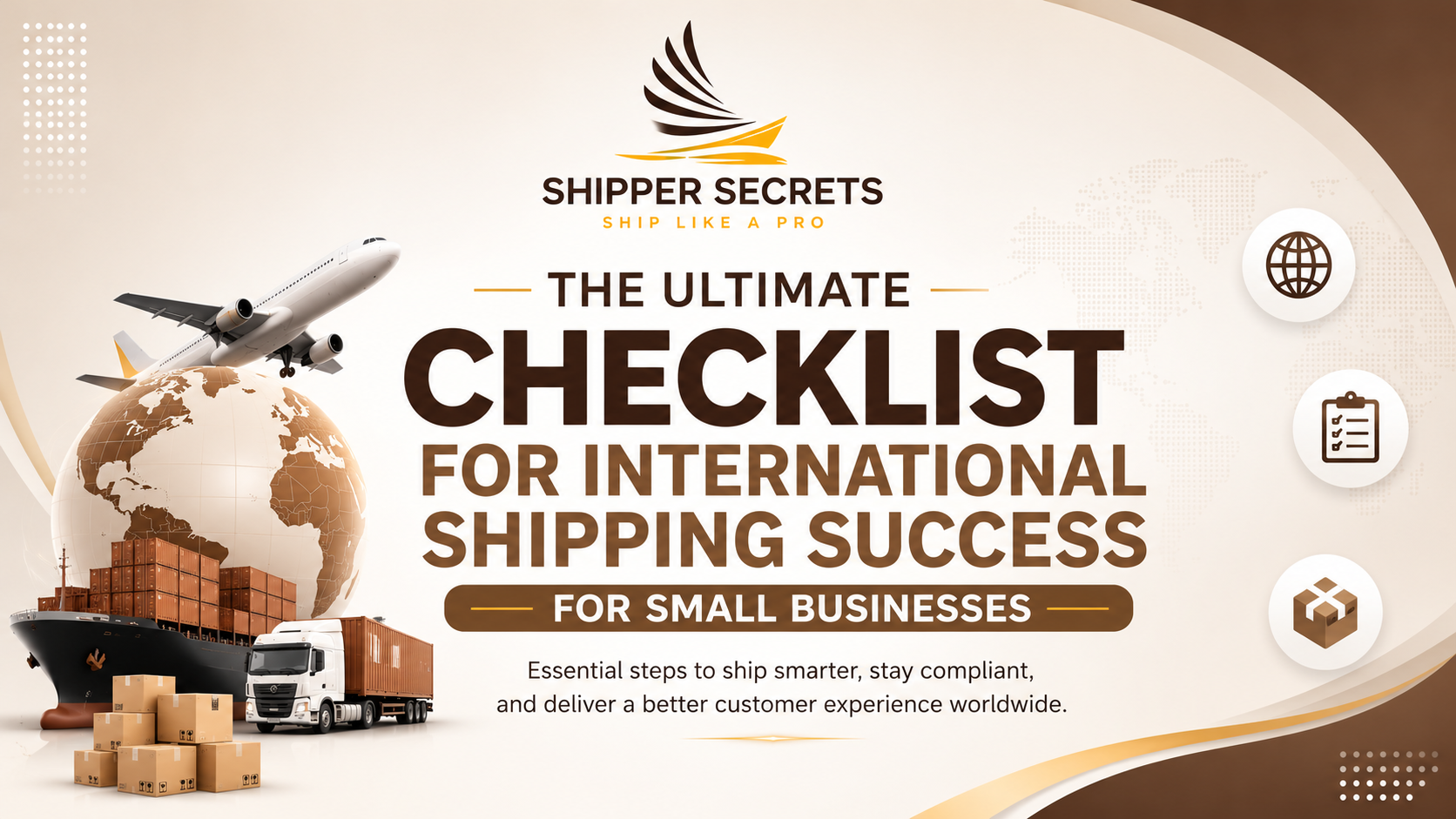
International shipping gives small businesses the opportunity to reach customers worldwide, increase revenue and grow beyond local markets. However, shipping products internationally involves customs regulations, documentation requirements, packaging standards, shipping costs and delivery expectations that must be managed carefully.
This ultimate checklist will help small businesses streamline their international shipping operations, avoid costly mistakes and deliver a better customer experience.
Why International Shipping Is Important for Small Businesses
Expanding into international markets offers several advantages:
-
Access to new customer bases
-
Increased sales and revenue opportunities
-
Enhanced brand visibility
-
Reduced dependence on local markets
-
Long-term business growth
A successful international shipping strategy helps businesses remain competitive while ensuring reliable deliveries across borders.
1. Research Your Target Markets
Before shipping internationally, understand the countries you plan to serve.
Key factors to review include:
-
Import regulations
-
Product restrictions
-
Customs requirements
-
Local duties and taxes
-
Delivery expectations
Understanding country-specific regulations can prevent customs delays and unexpected costs.
2. Prepare All Required Shipping Documents
Accurate documentation is essential for smooth customs clearance.
Common documents include:
-
Commercial Invoice
-
Packing List
-
Bill of Lading or Air Waybill
-
Certificate of Origin
-
Customs Declaration Forms
-
Export Licenses when required
Missing or inaccurate paperwork is one of the leading causes of international shipping delays.
3. Use the Correct HS Codes
The Harmonized System (HS) Code is used worldwide to classify products for customs purposes.
Using accurate HS codes helps:
-
Calculate duties correctly
-
Speed up customs clearance
-
Reduce compliance risks
-
Avoid penalties and shipment holds
Incorrect classifications can lead to delays and additional charges.
4. Choose the Right Shipping Method
Selecting the appropriate shipping method depends on your product type, budget and delivery timeline.
Air Freight
Best for:
-
Urgent shipments
-
High-value products
-
Lightweight cargo
Ocean Freight
Best for:
-
Large-volume shipments
-
Cost-effective transportation
-
Non-urgent deliveries
Courier Services
Best for:
-
E-commerce orders
-
Small parcels
-
Door-to-door delivery
Choosing the right option balances cost and delivery speed.
5. Calculate Total Shipping Costs
Many businesses focus only on freight charges and overlook additional expenses.
Consider:
-
Transportation costs
-
Customs duties
-
Import taxes
-
Fuel surcharges
-
Insurance fees
-
Handling charges
-
Storage fees
Providing transparent shipping costs helps improve customer trust and reduce abandoned orders.
6. Use Strong and Secure Packaging
International shipments typically pass through multiple transportation hubs and handling points.
Packaging best practices include:
-
Using durable corrugated boxes
-
Adding protective cushioning materials
-
Securing items to prevent movement
-
Protecting products from moisture
-
Following international packaging requirements
-
Ensuring pallet compliance when applicable
Proper packaging reduces the risk of damage during transit.
7. Label Packages Correctly
Every international shipment should include:
-
Sender details
-
Recipient details
-
Tracking information
-
Customs labels
-
Handling instructions
-
Country of origin information
Clear labeling improves delivery accuracy and customs processing.
8. Ensure Customs Compliance
Customs regulations vary from country to country.
Review:
-
Import restrictions
-
Product certifications
-
Required documentation
-
Duty and tax obligations
-
Country-specific regulations
Compliance helps prevent delays, fines and shipment rejections.
9. Purchase Shipping Insurance
Shipping insurance protects businesses from financial losses caused by:
-
Lost shipments
-
Damaged goods
-
Theft during transit
-
Unexpected shipping disruptions
Insurance is especially valuable for high-value shipments and international deliveries.
10. Offer Shipment Tracking
Customers expect visibility throughout the shipping process.
Benefits of shipment tracking include:
-
Improved customer satisfaction
-
Reduced support requests
-
Better communication
-
Increased trust and transparency
Tracking information allows customers to monitor their orders from dispatch to delivery.
11. Work with Reliable Logistics Partners
Experienced logistics providers can help manage:
-
Freight transportation
-
Customs clearance
-
Shipping documentation
-
Warehousing
-
Delivery coordination
A trusted shipping partner can simplify international operations and improve delivery performance.
12. Monitor Shipping Performance
Track important shipping metrics such as:
-
Delivery times
-
Shipping costs
-
Customs clearance times
-
Damage rates
-
Customer satisfaction
-
Return rates
Regular monitoring helps identify opportunities to improve efficiency and reduce expenses.
Common International Shipping Mistakes to Avoid
Many small businesses experience shipping challenges due to preventable errors.
Common mistakes include:
-
Incomplete customs documentation
-
Incorrect HS codes
-
Poor packaging practices
-
Underestimating duties and taxes
-
Shipping without insurance
-
Lack of tracking visibility
-
Ignoring destination-country regulations
Avoiding these issues can significantly improve shipping success rates.
Conclusion
International shipping can be a powerful growth driver for small businesses when managed correctly. Success depends on proper planning, accurate documentation, strong packaging, customs compliance and reliable logistics support.
By following this checklist, small businesses can reduce shipping risks, improve customer satisfaction, lower costs and confidently expand into global markets. A well-structured international shipping strategy not only supports business growth but also creates a positive experience for customers around the world.
Frequently Asked Questions (FAQs)
1. What is international shipping for small businesses?
International shipping for small businesses involves sending products to customers in other countries through carriers, freight forwarders, or logistics providers. It requires compliance with customs regulations, documentation requirements, and international shipping standards.
2. What documents are required for international shipping?
Common international shipping documents include a Commercial Invoice, Packing List, Bill of Lading or Air Waybill, Customs Declaration Forms, and Certificates of Origin when required. The exact requirements vary by destination country.
3. How can small businesses reduce international shipping costs?
Small businesses can reduce shipping costs by comparing carrier rates, using optimized packaging, consolidating shipments, negotiating shipping contracts, and selecting the most cost-effective transportation method for each shipment.
4. Why are HS Codes important in international shipping?
HS Codes help customs authorities identify products and determine applicable duties and taxes. Using the correct HS Code helps avoid delays, penalties, and customs clearance issues.
5. Should small businesses purchase shipping insurance for international orders?
Yes, shipping insurance is highly recommended for international shipments. It protects businesses from financial losses caused by damaged, lost, or stolen goods during transit and provides added peace of mind for both sellers and customers.
📞 Contact Us
📍 868 Cardiff Road, Naperville, IL 60565
📞 708.275.8418
🌐 Get in touch with our logistics experts for reliable shipping and freight solutions. 🚚✈️📦

 English
 Arabic
 Spanish
 Portuguese
 Deutsch
 Turkish
 Dutch
Dutch
 Italiano
 Russian
 Romaian
 Portuguese (Brazil)
 Greek
Greek