


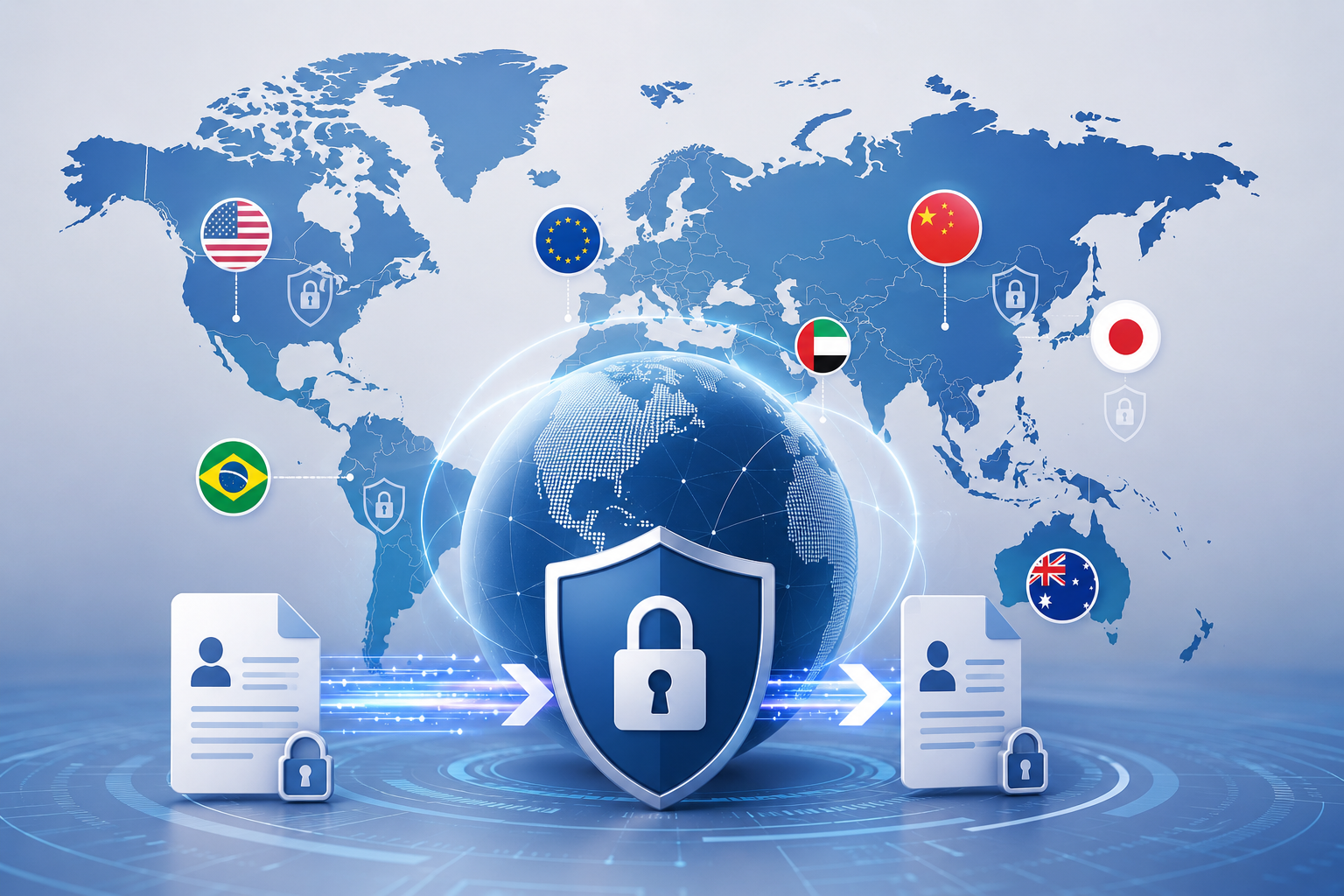
Modern digital ecosystems depend heavily on the movement and processing of personal information across borders, making data privacy laws by country a central part of corporate compliance strategies. Governments across the world have introduced detailed legal frameworks that regulate how organizations collect, store, process, and share personal data. At the same time, cross-border data transfer regulations play a crucial role in controlling how data moves between jurisdictions with different legal protections. These rules are designed to safeguard individuals from misuse of their personal information while ensuring businesses follow consistent legal standards. For global organizations, understanding these frameworks is essential for risk management, operational continuity, and regulatory compliance.
Does India Have a Data Privacy Law?
Yes, India has implemented the Digital Personal Data Protection Act, which establishes a structured framework for processing personal data. The law applies to organizations that collect or use digital personal information of individuals within India and outlines clear obligations for lawful processing. Businesses must ensure transparency, obtain valid consent where required, and implement strong safeguards to protect sensitive information. The framework also grants individuals rights such as access, correction, and deletion of their personal data. Companies operating in India must align their internal data handling policies with these legal requirements to avoid penalties and maintain trust. Compliance platforms such as mylegalpal often assist organizations in interpreting obligations and building structured governance systems.
Core Obligations Under India's Privacy Framework
Organizations subject to Indian privacy law must comply with several key responsibilities:
-
Maintain clear documentation of data processing activities.
-
Ensure consent is collected in a transparent and verifiable manner.
-
Protect data through technical and organizational security measures.
-
Provide mechanisms for user grievance redressal.
-
Report data breaches within prescribed timelines.
These requirements help create accountability and reduce the risk of misuse or unauthorized access to personal data.
Which Countries Have Comprehensive Data Privacy Laws?
Many jurisdictions now enforce strong privacy frameworks designed to regulate personal data processing. The European Union’s GDPR remains the most influential global model, setting strict standards for lawful processing, user rights, and international data transfers. Countries such as Brazil, Canada, Japan, South Korea, Singapore, Australia, and India have also developed detailed privacy regulations that address modern digital risks. While each legal system differs in structure, they generally share a commitment to protecting individual rights and ensuring organizational accountability in data-handling practices.
Key Elements Found in Major Privacy Jurisdictions
Despite regional differences, most privacy laws include similar foundational principles:
-
Legal basis requirements for data processing activities.
-
Strict transparency obligations for organizations.
-
Strong enforcement mechanisms with financial penalties.
-
Rights for individuals to access and control their data.
-
Mandatory security safeguards to prevent breaches.
These similarities help multinational organizations design unified compliance frameworks that can be adapted to local requirements.
How Do Data Privacy Laws Differ From One Country to Another?
Privacy laws vary significantly in terms of enforcement strength, individual rights, consent models, and regulatory oversight. Some countries require explicit opt-in consent for nearly all types of data processing, while others allow broader processing based on legitimate interests or contractual necessity. Enforcement agencies also differ in their authority and penalty structures, with some jurisdictions imposing substantial fines based on global revenue and others applying more limited sanctions. These differences require businesses to carefully analyze each jurisdiction’s rules rather than applying a single uniform privacy policy worldwide.
Challenges in Managing Multi-Jurisdiction Compliance
Organizations operating globally face several operational difficulties:
-
Aligning internal policies with multiple legal frameworks.
-
Tracking frequent regulatory updates across regions.
-
Managing differing definitions of personal data.
-
Handling cross-border user rights requests efficiently.
-
Coordinating compliance across international teams.
A well-designed governance structure helps reduce complexity and improves compliance consistency across business units.
Why Are Cross-Border Data Transfer Rules Important?
These rules ensure that personal information remains protected even when it is transferred outside the country where it was originally collected. Many businesses rely on international data flows for cloud computing, customer support, HR operations, and analytics services. Without legal safeguards, transferred data may be exposed to weaker protections or unauthorized government access. Regulatory frameworks aim to maintain a consistent level of protection regardless of where the data is processed. This helps protect individual rights while allowing global commerce and digital services to operate efficiently.
Cross-border regulations are particularly important in today’s interconnected digital economy, where companies frequently collaborate with international vendors and service providers. Without proper safeguards, organizations risk violating privacy laws and facing enforcement actions or contractual disputes.
How Do International Data Transfer Regulations Work?
International transfer rules typically require organizations to meet specific legal conditions before moving personal data across borders. Regulators assess whether the destination country provides adequate protection or whether additional safeguards are necessary. Common mechanisms include standard contractual clauses, adequacy decisions, binding corporate rules, and approved certification systems. Organizations may also need to conduct transfer impact assessments to evaluate potential risks related to government access or data security.
Steps for Ensuring Compliance in Data Transfers
To meet international transfer obligations, organizations should follow structured compliance steps:
-
Map all cross-border data flows within the organization.
-
Identify legal requirements in destination countries.
-
Implement approved contractual safeguards.
-
Conduct regular risk assessments of transfer activities.
-
Maintain detailed records of international data movement.
-
Review regulatory updates affecting transfer mechanisms.
These measures ensure that cross-border data transfer regulations are properly followed and that personal data remains protected during international processing.
Conclusion
Understanding data privacy laws by country and cross-border data transfer regulations is essential for any organization operating in today’s global digital environment. Privacy laws continue to evolve as governments respond to increasing data flows, cybersecurity threats, and technological advancements. Businesses must adapt by implementing structured compliance programs that address local legal requirements and international transfer obligations. Strong governance, clear documentation, and consistent risk management practices are essential for maintaining regulatory compliance. By applying these principles, organizations can protect personal data, reduce legal exposure, and support sustainable global operations while meeting diverse regulatory expectations across jurisdictions.

 English
 Arabic
 French
 Spanish
 Portuguese
 Deutsch
 Turkish
 Dutch
Dutch
 Italiano
 Russian
 Romaian
 Portuguese (Brazil)