


The journey of pregnancy may be over, but a mother’s body continues to recover for weeks and even months after childbirth. Whether you have had a normal delivery or a C-section, your body needs proper nourishment to heal, regain strength, and support your baby’s growth if you are breastfeeding.
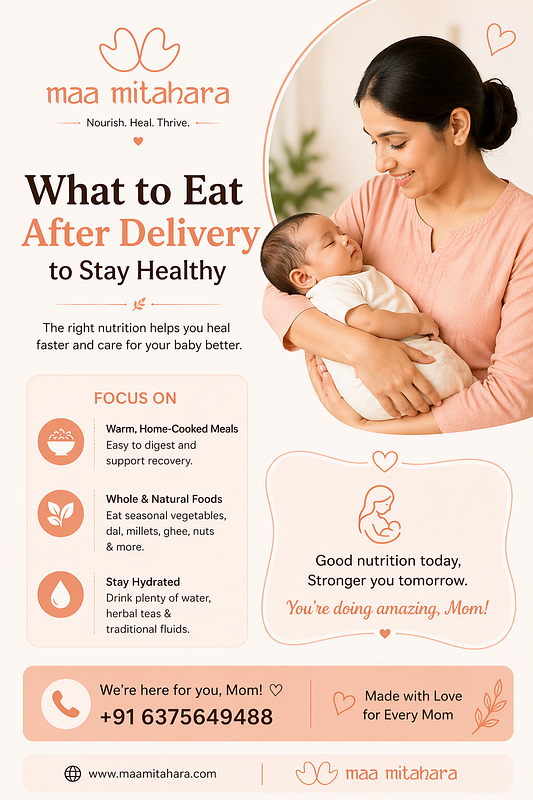
Many new mothers focus entirely on their newborn and often forget that their own nutrition is equally important. A balanced postpartum diet can improve energy levels, promote faster healing, maintain hormonal balance, and reduce weakness. If you are wondering What to Eat After Delivery to Stay Healthy, this complete guide will help you understand the best foods, eating habits, and nutrients your body needs during this special phase.
Why Your Postpartum Diet Matters?
Childbirth places tremendous physical demands on the body. Blood loss, hormonal changes, lack of sleep, and breastfeeding can leave you feeling exhausted. Eating nutritious meals throughout the day helps replenish lost nutrients and supports overall recovery.
A healthy postpartum diet can:
- Help the body heal faster
- Support breast milk production
- Improve digestion
- Increase energy levels
- Strengthen immunity
- Reduce the risk of nutritional deficiencies
Instead of following strict diets or avoiding foods unnecessarily, focus on eating wholesome and nutrient-rich meals.
Essential Nutrients Every New Mother Needs
1. Protein
Protein is necessary for repairing body tissues and maintaining muscle strength. Include foods like lentils, paneer, eggs, chicken, fish, tofu, sprouts, and dairy products in your meals.
2. Iron
Iron helps replace the blood lost during childbirth and prevents fatigue. Good sources include spinach, jaggery, dates, raisins, beans, and green leafy vegetables.
3. Calcium
Calcium keeps bones and teeth strong, especially while breastfeeding. Milk, curd, sesame seeds, ragi, and cheese are excellent options.
4. Healthy Fats
Healthy fats provide long-lasting energy and support brain health. Include nuts, seeds, homemade ghee in moderation, and avocados if available.
5. Fiber
Constipation is common after delivery. Fiber-rich foods like fruits, vegetables, oats, whole grains, and legumes help maintain healthy digestion.
6. Fluids
Drink plenty of water throughout the day. Coconut water, buttermilk, soups, and herbal drinks can also help maintain hydration.
Best Foods to Include After Delivery
If you’re searching for What to Eat After Delivery to Stay Healthy, your plate should include a variety of natural and minimally processed foods.
Whole Grains
Choose wheat, oats, brown rice, millets, and daliya to provide slow-release energy and improve digestion.
Seasonal Fruits
Fresh fruits supply vitamins, antioxidants, and fiber. Apples, bananas, oranges, papaya, pears, and pomegranate are excellent choices.
Green Vegetables
Leafy greens such as spinach, fenugreek leaves, and amaranth provide iron, calcium, and several important vitamins.
Dry Fruits and Nuts
Almonds, walnuts, dates, raisins, and figs offer healthy fats, minerals, and natural energy. Consume them in moderate quantities.
Lentils and Pulses
Dal, chickpeas, kidney beans, and black gram are affordable sources of protein and fiber that fit easily into Indian meals.
Homemade Soups
Vegetable and lentil soups are easy to digest while providing hydration and nutrients during recovery.
Indian Foods That Support Postpartum Recovery
Traditional Indian meals often include ingredients known for supporting recovery after childbirth. While every family has its own recipes, these foods are commonly included:
- Moong dal khichdi
- Vegetable daliya
- Ragi porridge
- Methi preparations
- Sesame-based recipes
- Gond laddus
- Panjiri
- Ajwain water (as advised by healthcare professionals)
Many families also include thoughtfully prepared traditional foods from Maa Mitahara, which are made using ingredients commonly associated with postpartum nourishment and recovery.
Foods to Eat if You Are Breastfeeding
Breastfeeding mothers need additional calories and nutrients to support milk production. Instead of eating significantly larger portions, focus on balanced meals.
Include:
- Milk and dairy products
- Protein-rich dals
- Whole grains
- Fresh vegetables
- Healthy snacks like nuts
- Plenty of water
Remember that every mother is different. Observe how your baby responds to your diet and consult your doctor if you notice any concerns.
Foods to Limit After Delivery
Although there are very few foods that must be completely avoided, moderation is important.
Try to reduce:
- Deep-fried foods
- Sugary desserts
- Soft drinks
- Highly processed snacks
- Excess caffeine
- Alcohol
A balanced diet is more effective than following restrictive eating plans.
Sample One-Day Postpartum Meal Plan
Early Morning
Warm water followed by soaked almonds and dates.
Breakfast
Vegetable daliya with a glass of milk.
Mid-Morning
One seasonal fruit and coconut water.
Lunch
Chapati, dal, green vegetables, curd, and salad.
Evening Snack
Roasted makhana or homemade laddus with herbal tea.
Dinner
Moong dal khichdi with mixed vegetables.
Before Bed
A glass of warm milk.
This meal pattern provides a good mix of carbohydrates, proteins, healthy fats, vitamins, and minerals.
Lifestyle Tips Along with Healthy Eating
Nutrition works best when combined with healthy daily habits.
- Eat small meals every 3–4 hours.
- Sleep whenever possible.
- Stay hydrated throughout the day.
- Include gentle physical activity after medical approval.
- Avoid skipping meals.
- Ask family members for help so you can focus on recovery.
When people ask What to Eat After Delivery to Stay Healthy, they often overlook these simple lifestyle habits, even though they play a major role in healing.
Common Postpartum Diet Mistakes
Many new mothers unintentionally make mistakes that slow recovery.
Some common ones include:
- Eating too little to lose pregnancy weight quickly.
- Drinking insufficient water.
- Skipping breakfast.
- Depending on packaged snacks.
- Ignoring protein intake.
- Avoiding fruits and vegetables because of myths.
Instead of following advice from social media alone, choose evidence-based nutrition and consult qualified healthcare professionals whenever needed.
Traditional Nutrition with Modern Convenience
Today’s mothers often have busy schedules while caring for a newborn. Preparing nutritious food every day may not always be easy. That’s why many families prefer ready-to-eat traditional options from Maa Mitahara, prepared using carefully selected ingredients that fit into postpartum meal routines.
However, these foods should complement a balanced diet rather than replace fresh home-cooked meals. The goal is to create variety while ensuring the body receives adequate nutrients throughout recovery.
If you’re still wondering What to Eat After Delivery to Stay Healthy, remember that consistency matters more than perfection. Small, nutritious choices every day make a significant difference over time.
Frequently Asked Questions
1. What should I eat immediately after delivery?
Start with easily digestible foods like khichdi, soups, soft rice, fruits, and plenty of fluids. Gradually return to a balanced diet based on your doctor’s advice.
2. How much water should a new mother drink?
Most mothers should aim for adequate hydration throughout the day, especially while breastfeeding. Drink water regularly and increase intake if you feel thirsty.
3. Can I eat fruits after delivery?
Yes. Fresh seasonal fruits provide vitamins, fiber, and antioxidants that support recovery and overall health.
4. Are homemade laddus good after childbirth?
Traditional laddus made with nutritious ingredients can be included in moderation as part of a balanced postpartum diet.
5. When can I start dieting to lose pregnancy weight?
Most healthcare professionals recommend focusing on recovery first. Weight loss should happen gradually after medical consultation.
Conclusion
Recovering after childbirth takes time, patience, and proper nutrition. Instead of chasing quick weight loss or following food myths, focus on balanced meals filled with proteins, healthy fats, whole grains, fruits, vegetables, and enough fluids. Good nutrition supports healing, improves energy, and helps mothers care for their babies with greater confidence.
Choosing wholesome foods consistently is the best answer to What to Eat After Delivery to Stay Healthy. Every mother’s recovery journey is unique, so listen to your body and seek professional guidance whenever necessary. With mindful eating and healthy habits, you can support your recovery while building a strong foundation for long-term wellness.

 English
 Arabic
 French
 Spanish
 Portuguese
 Deutsch
 Turkish
 Dutch
Dutch
 Italiano
 Romaian
 Portuguese (Brazil)
 Greek
Greek