


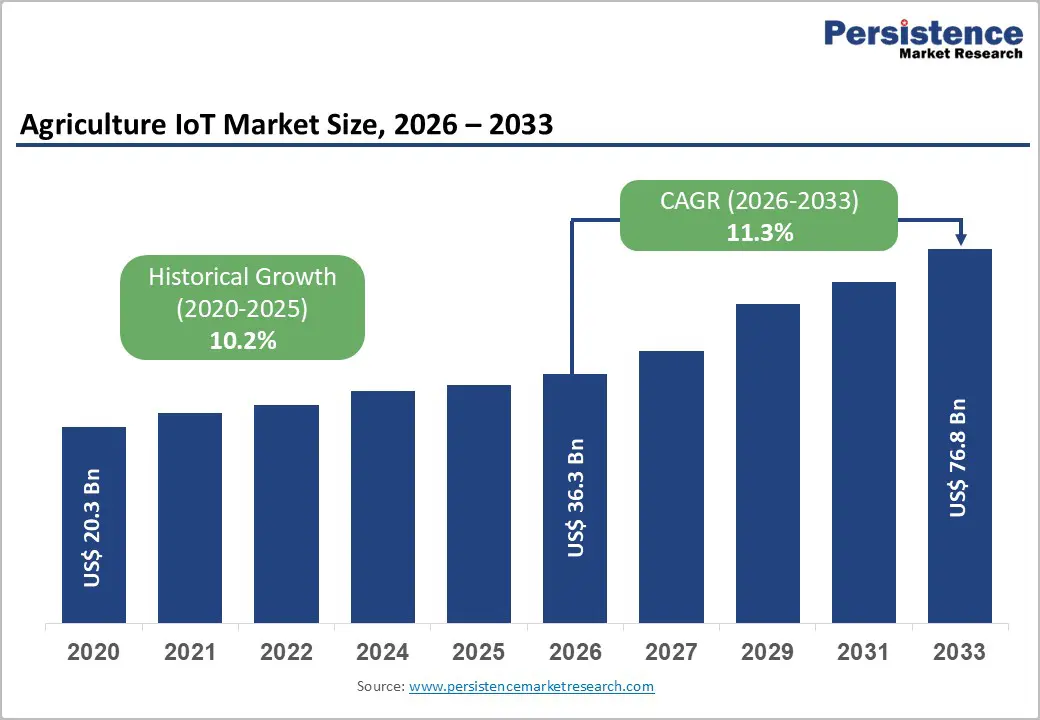
The global Lighting Control System Market is entering a high-growth phase driven by energy efficiency mandates, rapid urbanization, and the accelerating convergence of IoT, AI, and smart infrastructure technologies. Valued at US$47.4 billion in 2026, the market is projected to reach US$107.3 billion by 2033, expanding at a CAGR of 12.4% during the forecast period.
This strong growth trajectory reflects a structural shift in how buildings, cities, and infrastructure manage lighting—not as a static utility, but as an intelligent, data-driven system integrated into broader digital ecosystems.
Governments worldwide are tightening energy performance standards, while enterprises and municipalities are increasingly adopting smart lighting systems to reduce operational costs, enhance sustainability, and improve occupant experience. As a result, lighting control systems are transitioning from optional upgrades to essential components of modern infrastructure.
Market Overview
Lighting control systems enable automated management of lighting environments through sensors, controllers, software platforms, and communication networks. These systems adjust brightness, switching, color temperature, and scheduling based on occupancy, daylight availability, and user preferences.
The market is being shaped by three fundamental forces:
- Rising global focus on energy conservation and carbon reduction
- Expansion of smart buildings and smart cities
- Integration of IoT, AI, and cloud-based building management platforms
In parallel, regulatory frameworks such as ASHRAE 90.1-2022, California Title 24, and the EU Ecodesign Directive are making advanced lighting controls a compliance requirement rather than a discretionary investment.
Key Industry Highlights
Offering Leadership: Hardware Dominance
Hardware accounts for over 52% share in 2026, valued at more than US$24.7 billion. This dominance is driven by strong demand for:
- Sensors and occupancy detectors
- Lighting drivers and controllers
- Gateways and networking modules
- Centralized control units
Hardware remains the backbone of lighting ecosystems, ensuring reliability, automation, and interoperability with building systems.
Technology Leadership: Wired Systems Dominate, Wireless Accelerates
Wired systems hold over 60% share in 2026, valued above US$28.4 billion, due to:
- High reliability and stability
- Reduced interference risk
- Suitability for large-scale infrastructure projects
However, wireless systems are the fastest-growing segment, driven by:
- Easy retrofitting in existing buildings
- Reduced installation complexity
- Strong integration with IoT ecosystems
- Expansion of smart home and smart office applications
Installation Trend: Retrofit Dominates Market Demand
Retrofit installations account for over 58% share in 2026, valued at US$27.5 billion.
This dominance is attributed to:
- Aging building infrastructure globally
- Rising energy efficiency mandates
- Lower cost compared to full reconstruction
- Growing ESG compliance requirements
At the same time, new installations are gaining momentum in greenfield smart city and commercial projects.
Application Leadership: Commercial Segment Leads
The commercial segment holds over 37% market share in 2026, valued at US$17.5 billion.
Key adoption areas include:
- Corporate offices
- Retail stores
- Hospitality environments
- Educational institutions
These environments prioritize energy savings, operational efficiency, and occupant comfort, making them ideal for advanced lighting control deployment.
Regional Leadership: Asia Pacific Leads Global Market
Asia Pacific dominates with over 38% share in 2026, valued at US$18.0 billion.
Key growth drivers include:
- Rapid urbanization
- Expanding smart city initiatives in China and India
- Large-scale infrastructure investments
- Government-led LED modernization programs
North America follows with strong regulatory-driven demand, while Europe remains highly influential due to strict decarbonization policies.
Market Dynamics
Driver: Rising Energy Efficiency Mandates and Green Building Codes
Global governments are enforcing stricter energy efficiency standards, significantly boosting demand for lighting control systems.
The International Energy Agency (IEA) notes that governments representing over 85% of global energy demand introduced updated efficiency policies in 2025.
Regulations such as:
- ASHRAE 90.1 (U.S.)
- California Title 24
- EU Ecodesign Regulation
require automatic lighting shutoff, occupancy detection, and daylight-based dimming.
The U.S. Department of Energy estimates that combining LEDs with smart controls could save 569 TWh annually by 2035, reinforcing long-term adoption.
Driver: Smart Cities and IoT Integration
Smart city development is a major structural driver of the lighting control system market.
Municipalities are deploying:
- Smart street lighting networks
- Remote monitoring platforms
- Sensor-enabled adaptive lighting
China alone has 500+ smart city projects, many of which integrate intelligent lighting as a core infrastructure component.
IoT integration also enables:
- Predictive maintenance
- Real-time energy optimization
- Occupancy analytics
- Digital twin integration
This transforms lighting infrastructure into a data-generating asset rather than a standalone utility.
Restraint: High Initial Costs
Despite long-term benefits, adoption is slowed by:
- High upfront costs (2–4× conventional systems)
- Complex installation requirements
- Limited financing access in developing economies
Small and medium enterprises often struggle to justify payback periods despite strong energy savings over time.
Restraint: Interoperability Challenges
The market suffers from fragmentation across multiple communication protocols:
- DALI
- Zigbee
- Z-Wave
- KNX
- Bluetooth Mesh
- Wi-Fi
Lack of standardization increases integration complexity and costs. While the Matter protocol aims to unify ecosystems, full adoption is still evolving.
Opportunity: Human-Centric and AI-Driven Lighting
Human-centric lighting is emerging as a major growth frontier. These systems align lighting with circadian rhythms to improve:
- Productivity
- Sleep quality
- Cognitive performance
- Workplace well-being
AI-powered systems dynamically adjust lighting based on:
- Time of day
- Occupancy patterns
- User preferences
Solutions like Enlighted Eazy demonstrate the shift toward faster commissioning and intelligent automation.
Opportunity: Indoor Positioning and Occupancy Analytics
Modern lighting networks are evolving into dual-purpose systems, enabling:
- Indoor positioning (IPS)
- Space utilization tracking
- Workforce analytics
- Retail behavior mapping
- Healthcare flow optimization
This creates new revenue streams beyond lighting hardware, especially in smart commercial buildings.
Category Analysis
Offering: Hardware vs Services
Hardware remains dominant due to its essential role in system architecture. However, services are rapidly expanding, driven by:
- System integration needs
- Remote monitoring requirements
- Software updates and lifecycle management
- Custom lighting scene design
The shift toward Lighting-as-a-Service (LaaS) models is accelerating recurring revenue streams.
Technology: Wired vs Wireless
Wired systems dominate due to reliability and security, particularly in commercial and industrial applications.
Wireless systems, however, are expanding rapidly due to:
- Ease of deployment
- Retrofit compatibility
- Integration with smart ecosystems
- Growing consumer adoption
Hybrid systems combining wired backbone with wireless endpoints are becoming increasingly common.
Installation: Retrofit vs New Build
Retrofit dominates due to global building stock modernization needs.
New installations are growing faster, driven by:
- Smart city developments
- Green building certifications
- Integrated IoT design adoption
Developers increasingly embed lighting intelligence during construction to reduce long-term operational costs.
Application: Commercial, Residential, Industrial
Commercial remains the leading segment, but residential adoption is expanding quickly due to:
- Smart home ecosystems
- Voice-controlled lighting systems
- Energy savings awareness
- Wellness-oriented lighting design
Industrial applications are also growing, particularly in warehouses and manufacturing facilities adopting automation systems.
Regional Analysis
North America
North America holds over 30% share in 2026, driven by strict energy codes and advanced infrastructure.
Key factors:
- ASHRAE 90.1 compliance
- California Title 24 mandates
- Mature smart building ecosystem
- Strong retrofit demand
Smart city initiatives across major U.S. states further support growth.
Asia Pacific
Asia Pacific leads the global market due to rapid urban expansion.
Key drivers:
- Massive smart city investments
- Government-led LED upgrades
- Infrastructure development in India and China
- Strong industrial growth
India’s smart city programs and China’s urban automation projects are central growth engines.
Europe
Europe accounts for over 23% market share, supported by strict environmental regulations.
Key factors:
- EU decarbonization policies
- Energy Performance of Buildings Directive (EPBD)
- Strong retrofit incentives (e.g., Germany’s KfW program)
The region emphasizes sustainability-driven adoption across commercial and public infrastructure.
Competitive Landscape
The market is moderately consolidated, with leading players controlling over 40% global share.
Major companies include:
- Signify Holding
- Acuity Brands
- Lutron Electronics
- Schneider Electric
- Siemens AG
- Honeywell
- ABB
- Eaton Corporation
These companies compete through:
- Integrated hardware-software ecosystems
- AI-based energy analytics
- Cloud-based control platforms
- Subscription-based service models
Recent Developments
- Lutron Electronics (Feb 2026): Expanded intelligent lighting ecosystem integrating Ketra and Orluna for unified human-centric control.
- ABB (Feb 2026): Launched System Access Point 3.0 Wireless for scalable smart home and building automation systems.
Conclusion
The Lighting Control System Market is undergoing a structural transformation from traditional lighting infrastructure to intelligent, connected, and data-driven ecosystems.
Between 2026 and 2033, growth will be fueled by regulatory pressure, smart city expansion, and technological convergence with IoT and AI. While high costs and interoperability challenges remain barriers, the long-term outlook is strongly positive.
As buildings become smarter and cities more connected, lighting control systems will play a central role in shaping sustainable, efficient, and human-centric environments worldwide.

 English
 Arabic
 French
 Spanish
 Portuguese
 Turkish
 Dutch
Dutch
 Italiano
 Russian
 Romaian
 Portuguese (Brazil)
 Greek
Greek