


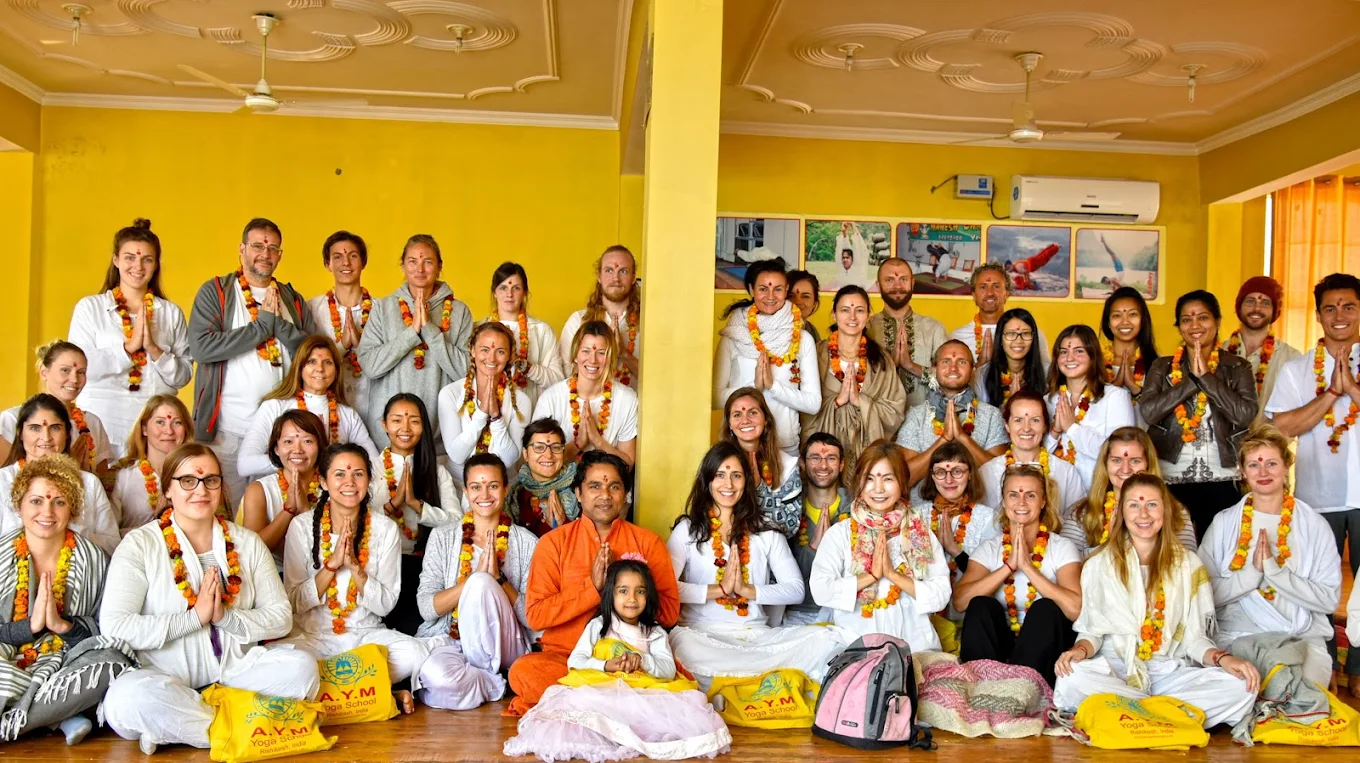
Most people searching for a yoga school in Rishikesh start with a general idea, get certified, learn to teach, deepen a personal practice. Fewer arrive with a clear sense of which specific style actually fits their goals. AYM Yoga School addresses this by offering training across several distinct styles rather than a single generalized program. This piece breaks down what each of those specializations actually involves.
Hatha Yoga
Hatha forms the foundation of most teacher training programs, including AYM's core courses. It emphasizes slower-paced, static postures with a strong focus on alignment, breath control, and foundational technique. Training in Hatha tends to suit students who want a solid grounding before branching into faster-paced styles, and it remains the most commonly requested style among studios hiring new instructors.
Vinyasa Yoga
Vinyasa-focused training at AYM builds on the Hatha foundation but shifts toward continuous, breath-linked movement between postures. Students in this track spend more time on sequencing and transitions, learning how to build a flowing class rather than a series of held poses. This style tends to appeal to instructors planning to teach more dynamic, fitness-oriented classes.
Kundalini Yoga
Kundalini training at AYM takes a noticeably different approach from Hatha or Vinyasa, incorporating repetitive movement, breathwork, chanting, and meditation aimed at energy awareness rather than purely physical conditioning. Students drawn to the more spiritual or energetic side of yoga, rather than the fitness-focused end of the spectrum, tend to find this track more aligned with their interests.
Prenatal Yoga
AYM's Prenatal yoga training is a specialized track aimed at preparing instructors to teach safely and effectively during pregnancy. This includes modified postures, breathing techniques suited to different trimesters, and an understanding of contraindications that a general teacher training course wouldn't necessarily cover in depth. It's a smaller but increasingly requested specialization, particularly among instructors looking to serve a specific client base.
Ayurveda-Integrated Training
Rather than treating Ayurveda as a single guest lecture within a broader course, AYM builds it into relevant programs as a core subject, covering dietary principles, lifestyle practices, and how Ayurvedic concepts intersect with yoga practice itself. This track suits students interested in a more holistic approach to wellness instruction, beyond asana and breathwork alone.
Choosing Between Styles
For students without a strong existing preference, starting with a Hatha-based 200-hour course remains the most practical route, since it builds the foundational skills relevant across every other style. Vinyasa, Kundalini, and Prenatal tracks tend to suit students who already have a clearer sense of the kind of classes they eventually want to teach, or who are drawn to a specific tradition rather than a general certification.
Combining Styles Across Longer Programs
Because AYM offers 300 and 500-hour training in addition to the standard 200-hour course, students aren't necessarily limited to a single style. A common path involves starting with a Hatha-based 200-hour certification and later pursuing a 300-hour course in a more specialized track, such as Vinyasa or Kundalini, once foundational teaching experience has been established.
Why Style Selection Matters
A yoga school in Rishikesh that only offers one generalized program limits what a graduating instructor is prepared to teach. Choosing a school with distinct, well-defined style tracks, rather than a single course loosely labeled "yoga teacher training", tends to produce instructors better equipped to serve a specific type of student, whether that's a fitness-focused studio class, a prenatal client, or a more meditative, energy-focused practice group.
Final Thoughts
The style of training chosen at a yoga school in Rishikesh shapes the kind of teacher a student becomes just as much as the certification hours themselves. AYM Yoga School's range across Hatha, Vinyasa, Kundalini, and Prenatal yoga, combined with its Ayurveda-integrated options, gives students the ability to align their training with the specific direction they want their teaching or their personal practice to take.

 Arabic
 French
 Spanish
 Portuguese
 Deutsch
 Turkish
 Dutch
Dutch
 Italiano
 Russian
 Romaian
 Portuguese (Brazil)
 Greek
Greek