


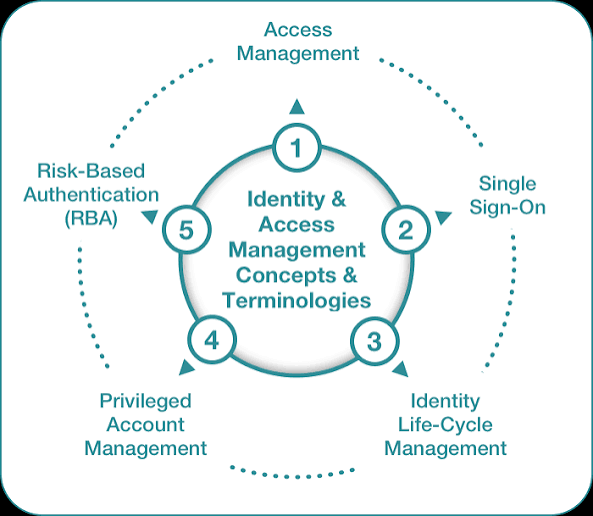
Organizations today operate in highly connected digital environments where employees, vendors, contractors, and business partners require access to multiple applications and cloud services. Managing these identities efficiently is essential for maintaining business continuity and protecting confidential information. Inadequate access controls can increase the risk of data breaches, insider threats, and compliance failures. A structured identity security framework enables businesses to control user permissions, monitor privileged activities, and strengthen authentication processes. Implementing a combination of governance, privileged account security, and modern authentication technologies helps organizations reduce cybersecurity risks while improving operational efficiency.
What is Identity Governance and Administration?
Identity Governance and Administration is a centralized process that manages digital identities and user access throughout the entire lifecycle of an account. From onboarding new employees to removing access when users leave the organization, every stage follows predefined security policies. Automated workflows ensure users receive permissions appropriate to their responsibilities while reducing manual administration. Regular access certification identifies unnecessary privileges, inactive accounts, and policy violations before they become security concerns. Organizations also gain improved visibility into user permissions, making compliance reporting and internal audits significantly easier while strengthening overall security governance.
What is Privileged Access Management and why is it important?
Privileged Access Management secures administrator accounts that possess elevated permissions across servers, cloud infrastructure, business applications, databases, and network devices. These privileged accounts require stronger protection because they can make critical changes to enterprise systems. Privileged Access Management uses encrypted password vaults, automated credential rotation, session monitoring, approval workflows, and activity recording to secure sensitive accounts. Restricting privileged access minimizes opportunities for insider threats while reducing the likelihood of successful external attacks. Comprehensive monitoring also provides detailed audit records that improve accountability and support regulatory compliance.
How do Multi-Factor Authentication Solutions improve cybersecurity?
Multi-Factor Authentication Solutions require users to verify their identity using multiple authentication methods before accessing enterprise systems. Authentication may combine passwords with biometric verification, authentication applications, security tokens, or one-time verification codes. Even if attackers obtain passwords through phishing or credential theft, additional verification significantly reduces the possibility of unauthorized access.
Benefits include:
-
Stronger protection against compromised credentials.
-
Better security for cloud applications.
-
Safer authentication for remote employees.
-
Reduced phishing-related account compromise.
-
Improved compliance with security regulations.
-
Enhanced protection for privileged users.
Using multiple authentication factors strengthens enterprise security without creating unnecessary complexity for legitimate users.
What is the difference between Identity Governance and Privileged Access Management?
Identity governance focuses on managing all digital identities across the organization, while privileged access management protects only accounts with elevated permissions. Identity governance automates user provisioning, access approvals, certification, and policy enforcement throughout the employee lifecycle. Privileged access management secures administrator credentials through encrypted storage, monitoring, and controlled access mechanisms.
Major differences include:
-
Identity governance manages organization-wide identities.
-
Privileged access management secures privileged accounts.
-
Identity governance automates access reviews.
-
Privileged access management protects administrative credentials.
-
Identity governance supports compliance initiatives.
-
Privileged access management reduces privileged security risks.
Deploying both solutions creates a complete identity security framework that protects standard users and administrators alike.
How do Identity and Access Management solutions help businesses?
Identity and Access Management solutions centralize authentication, authorization, and identity administration across enterprise systems. Automation simplifies account management while ensuring users receive appropriate access according to business policies. Security teams gain better visibility into user permissions and can respond more quickly to changing business requirements.
Business benefits include:
-
Automated onboarding and offboarding.
-
Faster account provisioning.
-
Centralized authentication.
-
Reduced administrative workload.
-
Better compliance reporting.
-
Improved visibility into user permissions.
-
Stronger protection against unauthorized access.
Organizations improve both operational efficiency and cybersecurity by maintaining centralized identity management throughout their technology infrastructure.
Best Practices for Identity Security
Role-based access controls, automated identity lifecycle management, periodic access reviews, secure credential storage, password rotation, and continuous monitoring form the foundation of an effective identity security program. Organizations should also enforce strong authentication for remote users and privileged accounts while providing ongoing cybersecurity awareness training to reduce credential-related threats.
Conclusion
Modern organizations require strong identity security to protect critical systems, confidential information, and digital operations. Effective governance, secure management of privileged accounts, centralized identity administration, and advanced authentication help reduce cybersecurity risks while supporting regulatory compliance. Businesses that continuously review user permissions and automate identity management processes build a more resilient security posture capable of supporting long-term growth and digital transformation.

 English
 Arabic
 French
 Spanish
 Portuguese
 Deutsch
 Turkish
 Dutch
Dutch
 Italiano
 Russian
 Portuguese (Brazil)
 Greek
Greek