


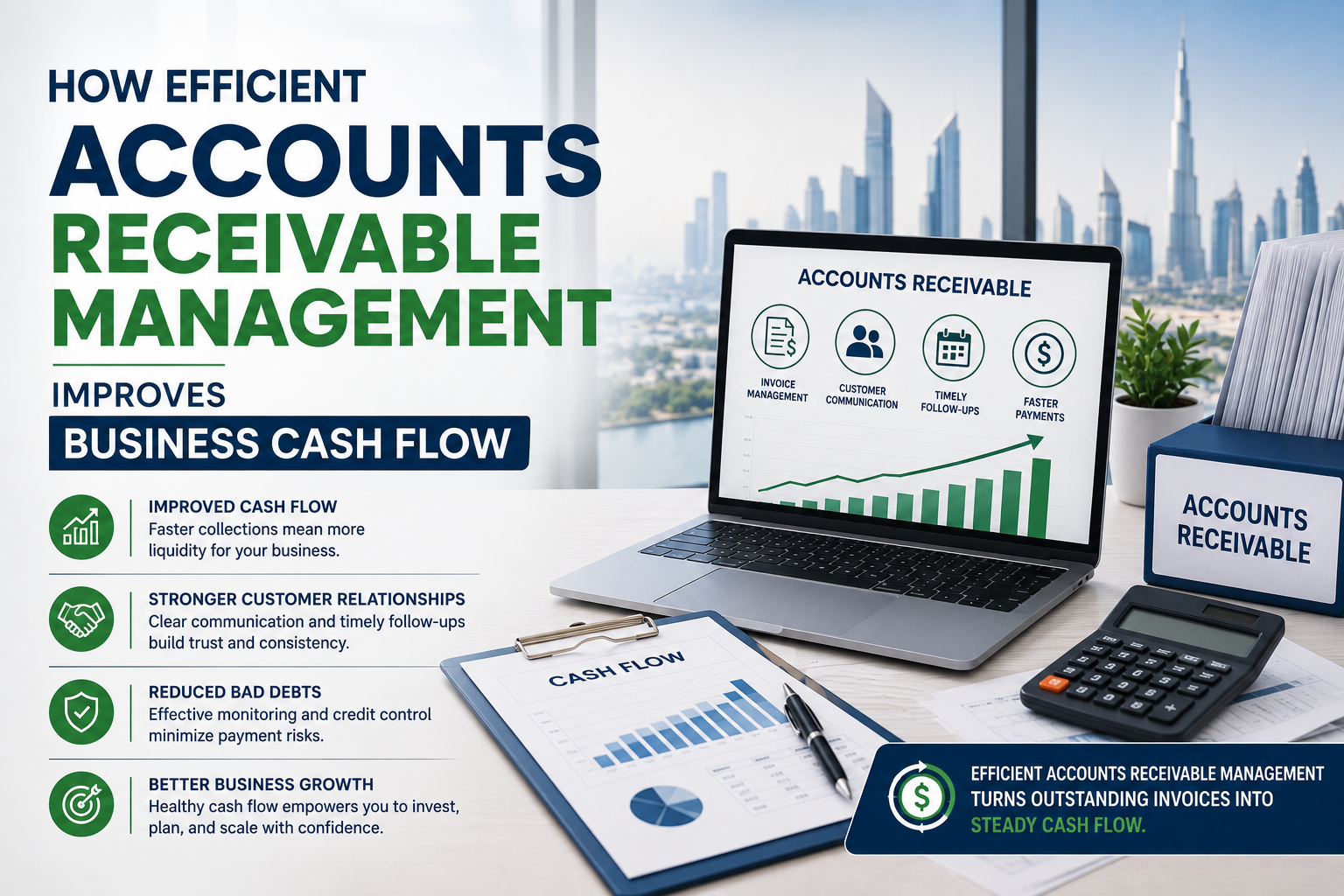
For many businesses, making sales is only half the battle. The real challenge begins after the invoice is sent. Delayed customer payments, overdue invoices, and inconsistent collection processes can disrupt cash flow, making it difficult to pay suppliers, cover operational expenses, and invest in business growth. Even highly profitable businesses can experience financial strain if they fail to collect payments on time.
This is why accounts receivable management is a critical component of financial success. A well-structured receivables process ensures that invoices are issued promptly, payments are tracked efficiently, and outstanding balances are collected without damaging customer relationships. Effective receivables management not only improves liquidity but also provides greater financial stability and confidence for future planning.
In this article, we'll explore how accounts receivable management improves business cash flow, the common challenges businesses face, and the best practices for maintaining a healthy financial position.
What Is Accounts Receivable Management?
Accounts receivable management refers to the process of monitoring, tracking, and collecting payments owed by customers for products or services sold on credit. It includes every stage of the customer payment cycle, from generating invoices to recording payments and following up on overdue accounts.
A strong receivables management system typically involves:
- Creating accurate invoices
- Sending invoices promptly
- Monitoring payment due dates
- Following up on overdue accounts
- Reconciling customer payments
- Maintaining accurate financial records
- Generating receivable aging reports
The objective is simple: ensure businesses receive payments quickly while maintaining positive relationships with customers.
Why Cash Flow Matters for Every Business
Cash flow is the movement of money into and out of a business. Positive cash flow allows organizations to meet their financial obligations, while poor cash flow can create operational challenges regardless of how much revenue the business generates.
Healthy cash flow enables businesses to:
- Pay employees on time
- Purchase inventory
- Pay suppliers
- Invest in expansion
- Meet tax obligations
- Handle unexpected expenses
- Build financial reserves
Without consistent incoming payments, businesses may struggle to operate smoothly despite having a strong customer base.
The Link Between Accounts Receivable and Cash Flow
Every unpaid invoice represents money that belongs to the business but is not yet available for use.
Efficient accounts receivable management shortens the time between making a sale and receiving payment. The faster invoices are collected, the more working capital becomes available to support day-to-day operations.
Businesses with efficient receivable systems typically experience:
- Faster customer payments
- Lower outstanding balances
- Reduced borrowing needs
- Better liquidity
- Improved financial stability
In contrast, poor receivables management often leads to cash shortages, delayed payments to suppliers, and limited growth opportunities.
Faster Invoicing Leads to Faster Payments
One of the simplest ways to improve cash flow is by sending invoices immediately after delivering products or services.
Delayed invoicing often results in delayed payments because customers cannot pay invoices they have not yet received.
Professional accounts receivable management ensures:
- Accurate invoice preparation
- Prompt invoice delivery
- Clear payment terms
- Correct customer information
- Proper supporting documentation
Businesses that invoice promptly often experience significantly shorter payment cycles.
Reduces Late Payments
Late payments are among the most common reasons businesses experience cash flow problems.
Efficient receivable management minimizes payment delays through:
- Payment reminders before due dates
- Automated follow-up emails
- Regular account monitoring
- Professional collection procedures
- Clear communication with customers
These practices encourage customers to prioritize payments while maintaining positive business relationships.
Improves Working Capital
Working capital measures a company's ability to cover its short-term obligations.
When customer payments are collected quickly, businesses have more cash available to:
- Purchase inventory
- Invest in equipment
- Expand operations
- Hire employees
- Cover daily operating expenses
Efficient accounts receivable management directly improves working capital by reducing the amount of money tied up in unpaid invoices.
Strengthens Customer Relationships
Many business owners assume payment collection negatively affects customer relationships. In reality, organized receivable management often improves communication and trust.
Professional processes ensure customers receive:
- Accurate invoices
- Transparent payment terms
- Timely reminders
- Quick responses to billing questions
- Efficient dispute resolution
When customers understand payment expectations from the beginning, misunderstandings become less frequent.
Reduces Bad Debt
Not every overdue invoice becomes a successful payment.
The longer invoices remain unpaid, the greater the risk they become uncollectible.
Strong accounts receivable management helps reduce bad debt by:
- Identifying overdue accounts early
- Escalating collection efforts appropriately
- Monitoring customer payment behavior
- Reviewing customer credit policies
- Resolving disputes before they become major issues
Lower bad debt improves profitability and protects business cash flow.
Supports Better Financial Forecasting
Reliable financial forecasting depends on knowing when customer payments are likely to be received.
Accurate receivable data enables businesses to forecast:
- Monthly cash inflows
- Available working capital
- Seasonal revenue trends
- Future investments
- Financing requirements
This information helps management make informed financial decisions with greater confidence.
Improves Financial Reporting
Efficient receivable processes contribute to accurate accounting records and reliable financial statements.
Businesses gain access to valuable reports such as:
- Accounts receivable aging reports
- Outstanding invoice summaries
- Customer payment history
- Collection performance reports
- Cash flow projections
These reports provide valuable insights into financial health and customer payment behavior.
Helps Identify High-Risk Customers
Not every customer follows the same payment pattern.
Effective accounts receivable management allows businesses to identify customers who:
- Frequently pay late
- Exceed credit limits
- Require repeated collection efforts
- Have growing outstanding balances
Identifying these trends early enables businesses to review credit policies and reduce financial risk.
Automation Improves Efficiency
Modern accounting technology has transformed receivables management.
Automation helps businesses:
- Generate invoices instantly
- Send automatic payment reminders
- Track outstanding invoices
- Record customer payments
- Generate financial reports
- Reduce manual data entry
Automation not only improves efficiency but also minimizes human error and accelerates payment collection.
Common Accounts Receivable Challenges
Many businesses experience similar receivable-related issues, including:
- Delayed invoicing
- Manual tracking systems
- Poor follow-up procedures
- Customer payment disputes
- Inaccurate billing information
- Lack of payment reminders
- Inefficient reporting
Addressing these challenges can significantly improve cash flow and operational efficiency.
Best Practices for Effective Accounts Receivable Management
Businesses can strengthen their receivables process by implementing several proven practices.
Establish Clear Payment Terms
Customers should understand:
- Payment due dates
- Accepted payment methods
- Late payment policies
- Credit terms
Clear expectations reduce confusion and improve payment compliance.
Invoice Quickly
Invoices should be issued immediately after delivering products or services to avoid unnecessary payment delays.
Monitor Outstanding Accounts
Regular review of receivable aging reports helps identify overdue invoices before they become serious collection problems.
Communicate Professionally
Friendly payment reminders and prompt responses to customer inquiries often resolve payment delays without conflict.
Review Credit Policies
Regularly evaluating customer credit limits reduces financial risk and improves collection success.
Why Businesses Choose Professional Accounts Receivable Services
Managing receivables internally can become challenging as businesses grow.
Professional service providers offer:
- Experienced accounting professionals
- Faster invoice processing
- Accurate payment tracking
- Efficient collection procedures
- Real-time financial reporting
- Improved cash flow visibility
- Reduced administrative workload
Outsourcing allows business owners to focus on growth while experts manage payment collection efficiently.
Signs Your Business Needs Better Accounts Receivable Management
Your business may benefit from professional receivable management if you experience:
- Increasing overdue invoices
- Frequent cash flow shortages
- Slow customer payments
- High outstanding balances
- Difficulty tracking invoices
- Growing administrative workload
- Inconsistent collection efforts
Addressing these issues early can strengthen financial performance and improve long-term stability.
Conclusion
Effective accounts receivable management is much more than collecting outstanding invoices. It plays a vital role in maintaining healthy cash flow, improving working capital, reducing bad debt, and supporting informed financial decision-making. Businesses that establish efficient invoicing, payment tracking, and collection processes are better equipped to maintain stability, seize growth opportunities, and navigate financial challenges with confidence.
For businesses looking to optimize their receivables process, improve cash flow, and streamline financial operations, Dubai Business and Tax Advisors (DBTA) offers professional accounting and financial management solutions tailored to the needs of businesses across the UAE. By partnering with experienced professionals, companies can build stronger financial foundations and focus on sustainable business growth.

 English
 Arabic
 French
 Spanish
 Portuguese
 Deutsch
 Turkish
 Dutch
Dutch
 Russian
 Romaian
 Portuguese (Brazil)
 Greek
Greek