


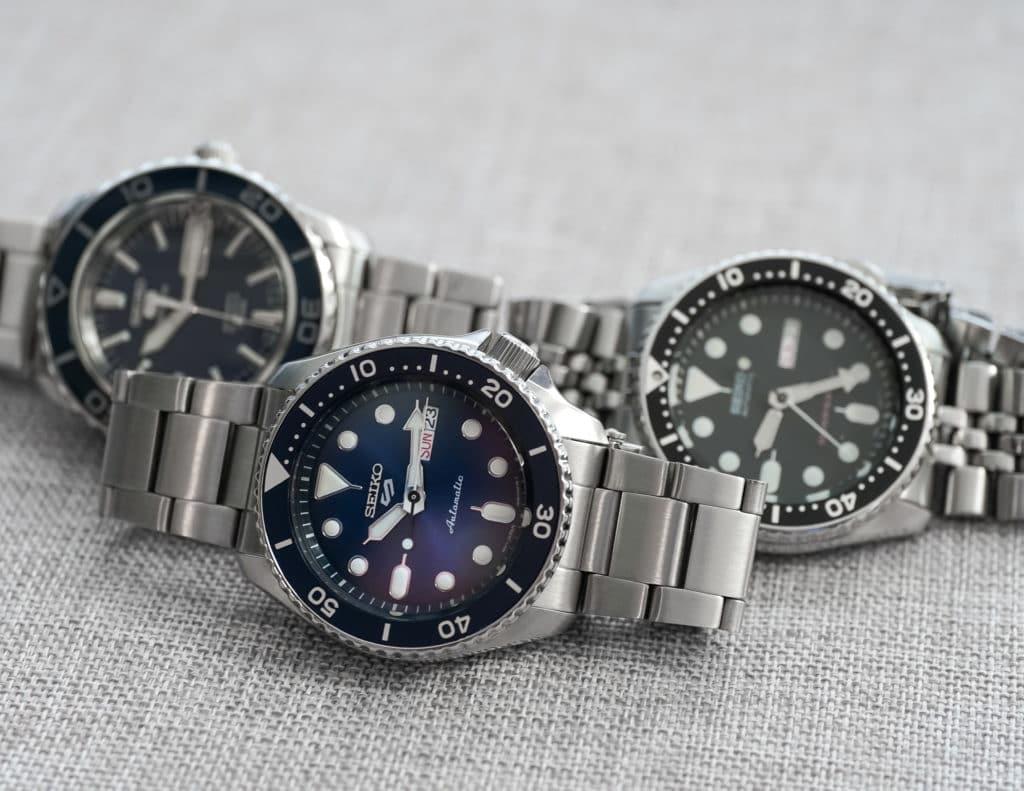
When Kintarō Hattori opened a modest clock repair shop in Tokyo’s Ginza district in 1881, he was driven by a single guiding philosophy: “Always one step ahead of the rest.” Over 140 years later, that simple commitment has evolved Seiko Watch into one of the most respected and vertically integrated watch manufacturers in global horology.
Unlike brands that rely heavily on outsourced parts, Seiko designs and manufactures every component in-house—from balance springs and mainspring alloys to synthetic jewels, dials, cases, and quartz crystals. This mastery of both mechanical tradition and electronic precision allows Seiko to bridge the gap between everyday accessibility and high-end luxury watchmaking.
Pivotal Milestones in Seiko’s History
Seiko's history is defined by breakthroughs that altered the course of timekeeping worldwide. Rather than merely following European watchmaking conventions, the Japanese manufacturer repeatedly introduced technological leaps that disrupted industry standards.
┌─────────────────────────────────────────────────────────────────────────┐
│                    SEIKO HOROLOGICAL MILESTONES                         │
├─────────────────────────────────────────────────────────────────────────┤
│ 1913 ──► The Laurel: Japan's very first domestic wristwatch.           │
│ 1965 ──► The 62MAS: Seiko's debut professional 150m diver's watch.      │
│ 1969 ──► Quartz Astron: World's first commercial quartz wristwatch.     │
│ 1999 ──► Spring Drive: Tri-synchro regulator combining torque & quartz. │
└─────────────────────────────────────────────────────────────────────────┘
The release of the Quartz Astron in 1969 demonstrated that micro-engineering could yield unprecedented accuracy, setting off a global shift in watch manufacturing. Decades later, Seiko unveiled the Spring Drive—a proprietary movement that replaces a conventional escapement with an electromagnetic regulator, creating a smooth, continuously gliding second hand that reflects the continuous flow of time.
Core Seiko Watch Collections
Seiko’s modern catalog caters to diverse tastes, ranging from rugged tool watches built for extreme marine environments to dress timepieces featuring centuries-old Japanese artisan crafts.
1. Seiko Prospex (Professional Specifications)
Built for land, sea, and sky, the Prospex line represents Seiko’s performance-driven tool watches. Known for iconic dive watch cases like the "Turtle," "Tuna," and "Samurai," Prospex timepieces meet rigorous ISO standards for underwater legibility, magnetic resistance, and structural durability.
2. Seiko Presage (Artisanal Japanese Craft)
The Presage collection showcases traditional Japanese craftsmanship paired with mechanical movements. Presage dials often incorporate centuries-old techniques, including hand-applied Urushi lacquer, Arita porcelain, cloisonné enamel, and radial guilloché textures inspired by classic cocktail mixology.
3. Seiko 5 Sports (The Mechanical Gateway)
Since its inception, the Seiko 5 concept has made mechanical watch ownership accessible to generations of enthusiasts. The "5" signifies five essential attributes:
-
Automatic winding mechanism
-
Day-date complication at the 3 o'clock position
-
Practical water resistance
-
Recessed crown at the 4 o'clock position
-
Durable case and bracelet construction
4. Seiko Astron (Satellite Precision)
Naming its flagship tech line after the 1969 original, modern Astron GPS Solar timepieces connect automatically to the global GPS network. They adjust to local time zones across the globe using light energy alone, requiring no battery changes or manual calendar adjustments.
| Collection | Focus Area | Signature Technology | Key Appeal |
| Seiko 5 Sports | Daily mechanical wear | Caliber 4R36 / 4R34 (GMT) | Versatile styling & incredible value |
| Prospex | Professional diving & sports | Solar Chronograph, 6R/8R Calibers | Rugged durability & ISO dive specs |
| Presage | Dress & classic watchmaking | Enamel, Arita Porcelain, Urushi Dials | Handcrafted Japanese aesthetics |
| Astron | High-tech global travel | GPS Solar Dual-Time Chronograph | Exact satellite time synchronization |
In-House Engineering and Mechanical Movements
A primary reason watch collectors hold Seiko in high regard is its movement architecture. The brand engineers its mechanical calibers with longevity and practical serviceability in mind:
Spron Alloys: Seiko developed proprietary Spron alloys for its mainsprings and hairsprings, offering superior elasticity, corrosion resistance, and magnetic immunity over standard metallic alloys.
-
4R Series (Workhorse Reliability): Found in entry-level Seiko 5 Sports and introductory Prospex models, calibers like the 4R35 and 4R36 feature hand-winding, hacking seconds, and 41-hour power reserves.
-
6R Series (Enhanced Power & Precision): Powering mid-range Prospex and Presage references, 6R movements deliver longer power reserves (up to 70 hours) and tighter accuracy tolerances.
-
8R Series (High-End Chronographs): Utilizing column wheels and vertical clutches, Seiko's automatic chronographs offer instant response times and smooth pusher actuation without hand-jump.
The Modding and Enthusiast Culture
Beyond retail sales, Seiko has fostered one of the most vibrant enthusiast communities in horology. Models like the legacy SKX007 spawned a global watch modification ("modding") subculture. Enthusiasts routinely customize bezels, hands, sapphire crystals, and dial layouts, making Seiko a hands-on canvas for horological creative expression.
Whether looking for a dependable daily automatic tool watch or an artisanal dress piece, Seiko’s blend of manufacturing independence, historical significance, and design depth cements its status as an icon of global timekeeping.

 English
 Arabic
 French
 Spanish
 Portuguese
 Deutsch
 Turkish
 Dutch
Dutch
 Italiano
 Russian
 Portuguese (Brazil)
 Greek
Greek