


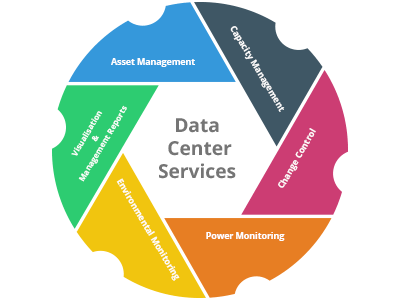
To fully comprehend the physical foundation of our digital world, it is essential to understand the intricate and capital-intensive structure of the Data Center Service Industry. This is not a simple industry of IT companies; it is a complex, multi-layered ecosystem where real estate development, heavy industrial engineering, and cutting-edge technology all converge. The industry is comprised of the companies that build, own, operate, and provide services within the massive physical facilities that house the internet and the cloud. The interactions between these diverse players—from the company that pours the concrete to the company that manages the servers—are what make the digital world run. Understanding the different layers and players within this industrial structure is key to appreciating the immense scale and complexity of building the "factories" of the 21st century.
At the very top of the industry, as the primary drivers of demand, are the hyper-scale cloud and internet companies. Firms like Amazon, Microsoft, Google, and Meta are the largest tenants and operators of data centers in the world. Their insatiable need for more computing capacity to power their global services is the primary engine of the entire industry. They operate in two ways: in some cases, they act as their own developers, buying vast tracts of land and building their own massive, highly customized data center campuses. In other cases, especially when speed-to-market is critical, they act as the anchor tenant, leasing huge amounts of capacity from third-party data center developers. Their leasing decisions and technical requirements effectively set the standards for the entire industry.
A second major layer of the industry consists of the third-party data center operators, which can be broadly divided into wholesale and retail colocation providers. The wholesale providers are essentially specialized real estate companies, many of which are structured as Real Estate Investment Trusts (REITs). The two dominant global players in this space are Digital Realty and Equinix. Their business model is to build, own, and operate a global portfolio of massive data center facilities and then lease out large, dedicated spaces (often entire buildings) to a single tenant, such as one of the hyper-scalers or a major bank. The retail colocation providers, on the other hand, cater to a much larger number of smaller enterprise customers, leasing out smaller increments of space, from a single server rack up to a private cage, providing a secure and reliable home for their IT infrastructure.
The entire data center service industry is built upon a deep and complex supply chain of equipment vendors and specialized service providers. This includes the major IT hardware manufacturers who supply the millions of servers and storage devices. The Data Center Service Market Size Is Projected To Grow a Valuation of USD 700963.07 Billion by 2035, Reaching at a CAGR of 17.67% During 2025 - 2035. This massive market also relies on the industrial giants like Schneider Electric and Vertiv, who manufacture the critical power and cooling infrastructure—the UPS systems, generators, and chillers that are the lifeblood of the data center. A host of specialized architectural, engineering, and construction firms are responsible for the physical design and build-out of these complex facilities. And perhaps most critically, the utility companies that can provide the massive amounts of reliable and increasingly renewable power that these facilities require are essential and powerful partners in any new data center development.

 English
 Arabic
 French
 Portuguese
 Deutsch
 Turkish
 Dutch
Dutch
 Italiano
 Russian
 Romaian
 Portuguese (Brazil)
 Greek
Greek