


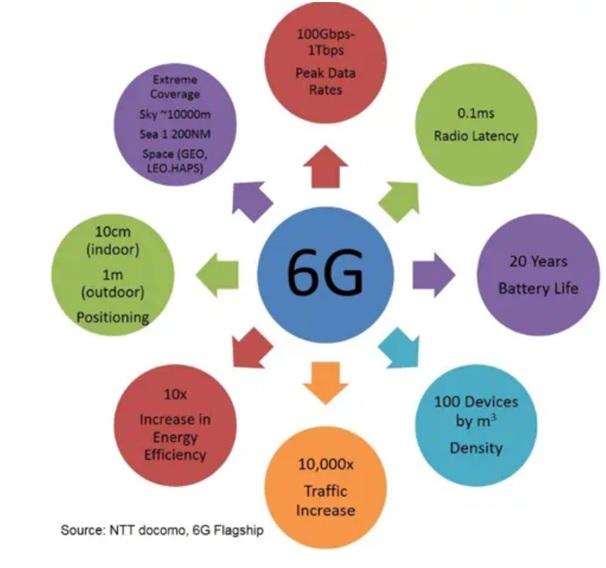
The 6G Industry is currently dominated by research, consortium-building, and early prototyping rather than commercial rollout. Universities, national labs, telecom vendors, and operators collaborate to define target capabilities, candidate spectrum, and architectural principles. The industry’s competitive stakes are high because leadership in 6G can influence global supply chains, patent revenue, and national digital infrastructure resilience. Unlike prior generations, the 6G industry is also converging more tightly with cloud computing and AI, potentially changing who holds power in the ecosystem. As a result, traditional telecom players are partnering with hyperscalers, semiconductor companies, and vertical industries to co-develop use cases. Industry focus includes not only peak performance, but also manageability, energy efficiency, and trust. The path from research to deployment will depend on standards maturity, spectrum policy, and the ability to prove real-world value.
Industry participants are aligning around several pillars: AI-native automation, integrated sensing, non-terrestrial coverage, and deeper edge integration. Each pillar creates new supplier categories and reshapes existing ones. Semiconductor innovation is critical, as higher-frequency radios and wider channels require efficient hardware. Test and measurement suppliers play a major role, because validating new spectrum bands and antenna systems requires advanced instrumentation. Systems integrators and consulting firms will influence adoption by helping enterprises design private networks and integrate 6G capabilities into operations. Cybersecurity firms also become central, since 6G may support safety-relevant systems where breaches could have physical consequences. The industry must also manage interoperability across vendors and networks. If fragmentation grows, device ecosystems suffer, and adoption slows. Therefore, industry governance through standards bodies becomes a primary coordination mechanism.
Deployment readiness will be defined by pilot outcomes and operational practicality. Operators will examine site density, backhaul requirements, power consumption, and maintainability. Enterprises will evaluate whether 6G can deliver deterministic performance better than alternatives like wired networks, Wi-Fi evolution, or 5G private networks. Regulators will assess safety, spectrum efficiency, and interference management. Workforce readiness is another industry concern: advanced RF, AI operations, and edge computing skills are scarce. Training and tooling must evolve to keep networks manageable. The industry will likely adopt phased approaches, deploying 6G first in hotspots, campuses, and industrial zones before widespread coverage. This mirrors prior generational rollouts, but 6G complexity may make phased deployment even more necessary.
The industry outlook suggests increasing pressure to prove tangible benefits early. Governments funding research will expect industrial outcomes and economic impact. Operators will demand business cases tied to enterprise services, not just consumer speed. Vendors will compete on energy efficiency, automation, and security assurance. Cross-industry alliances will expand as use cases become more vertical-specific. Over time, the 6G industry may redefine telecom as a combined connectivity-and-compute utility, with sensing capabilities embedded. Success will depend on turning ambitious specifications into reliable products and operational models. The most influential industry players will be those that align standards, hardware, software, and services into deployable solutions that deliver measurable ROI.
Top Trending Reports:

 English
 Arabic
 French
 Spanish
 Portuguese
 Deutsch
 Dutch
Dutch
 Italiano
 Russian
 Romaian
 Portuguese (Brazil)
 Greek
Greek