


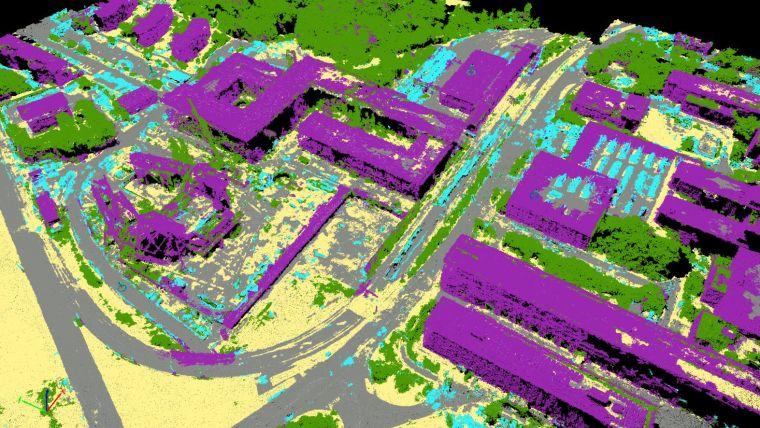
The software that transforms a collection of simple photographs into a detailed 3D model is a sophisticated and powerful system, combining advanced algorithms with a user-centric workflow. The architecture of a modern Terrestrial Photogrammetry Software Market Platform can be understood as a pipeline of interconnected modules, each performing a critical stage of the reconstruction process. The journey begins in the Project and Data Management Module. This is where the user imports their set of overlapping photographs and organizes their project. A key function of this module is to read the EXIF data from each image file, which contains important information like the camera model, focal length, and exposure settings. The platform uses this information as a starting point for its calculations. This module also provides the interface for incorporating Ground Control Points (GCPs), which are precisely surveyed points visible in the images. By marking the location of these GCPs in the photos, the user can georeference the resulting 3D model, ensuring it is accurately scaled, oriented, and positioned in a real-world coordinate system, a critical step for surveying and engineering applications.
The heart of the platform is the Core 3D Reconstruction Engine. This is where the heavy computational lifting occurs, and it is itself composed of several sub-modules. The first is the Structure from Motion (SfM) Engine. This engine analyzes all the imported images to find thousands of matching feature points between them. It then runs a complex mathematical process called "bundle adjustment" to simultaneously solve for the 3D position of all those points and the exact camera position and orientation for every photo. The result is a sparse point cloud. The next sub-module is the Multi-View Stereo (MVS) Engine. Using the now-known camera positions, this engine performs a much more intensive, pixel-by-pixel comparison between the images to calculate the depth information for a much larger set of points, generating the dense point cloud. The third sub-module is the Meshing and Texturing Engine. This takes the dense point cloud and intelligently connects the points to create a solid polygonal mesh surface, and then projects the original photographic detail onto this mesh to create the final, photorealistic textured model. The efficiency and quality of these core algorithms are the primary differentiators between competing software platforms.
Once the 3D model is generated, the platform provides a suite of tools in its Editing and Analysis Module to allow the user to refine and extract value from the data. The model can often contain unwanted elements or "noise" from the background, and this module provides tools for cleaning and editing the mesh, filling holes, and simplifying the polygon count for easier use in other applications. More importantly, for professional users, this module contains a powerful set of measurement and analysis tools. Users can accurately measure distances, areas, and surfaces directly on the 3D model. They can calculate the volume of a stockpile or an excavation. The platform can also be used to generate other valuable data products, such as high-resolution orthophotos (geometrically corrected, map-like images of a facade or surface) and Digital Elevation Models (DEMs). This ability to extract precise, quantifiable measurements and derived products from the 3D model is what transforms photogrammetry from a simple visualization tool into a powerful engineering and scientific instrument.
Finally, a modern platform is built with an Export and Interoperability Layer to ensure that the generated data can be used in a wide range of other professional software workflows. A 3D model that is trapped within the photogrammetry software is of limited use. Therefore, the platform must support a vast array of industry-standard export formats. For the 3D models and meshes, this includes formats like OBJ, FBX, and 3DS, which are widely used in 3D modeling, animation, and game development software. For the point clouds, it includes formats like LAS and E57, which are the standard for use in CAD and GIS software and for interoperability with laser scanning data. For the orthophotos and DEMs, it includes standard geospatial formats like GeoTIFF. This robust export capability is essential, as it allows the photogrammetry software to act as the first step in a much larger digital workflow, providing the high-quality 3D data that is then used for design, analysis, or visualization in other specialized applications across the AEC, entertainment, and geospatial industries.
Top Trending Reports:

 Arabic
 French
 Spanish
 Portuguese
 Deutsch
 Turkish
 Dutch
Dutch
 Italiano
 Russian
 Romaian
 Portuguese (Brazil)
 Greek
Greek