


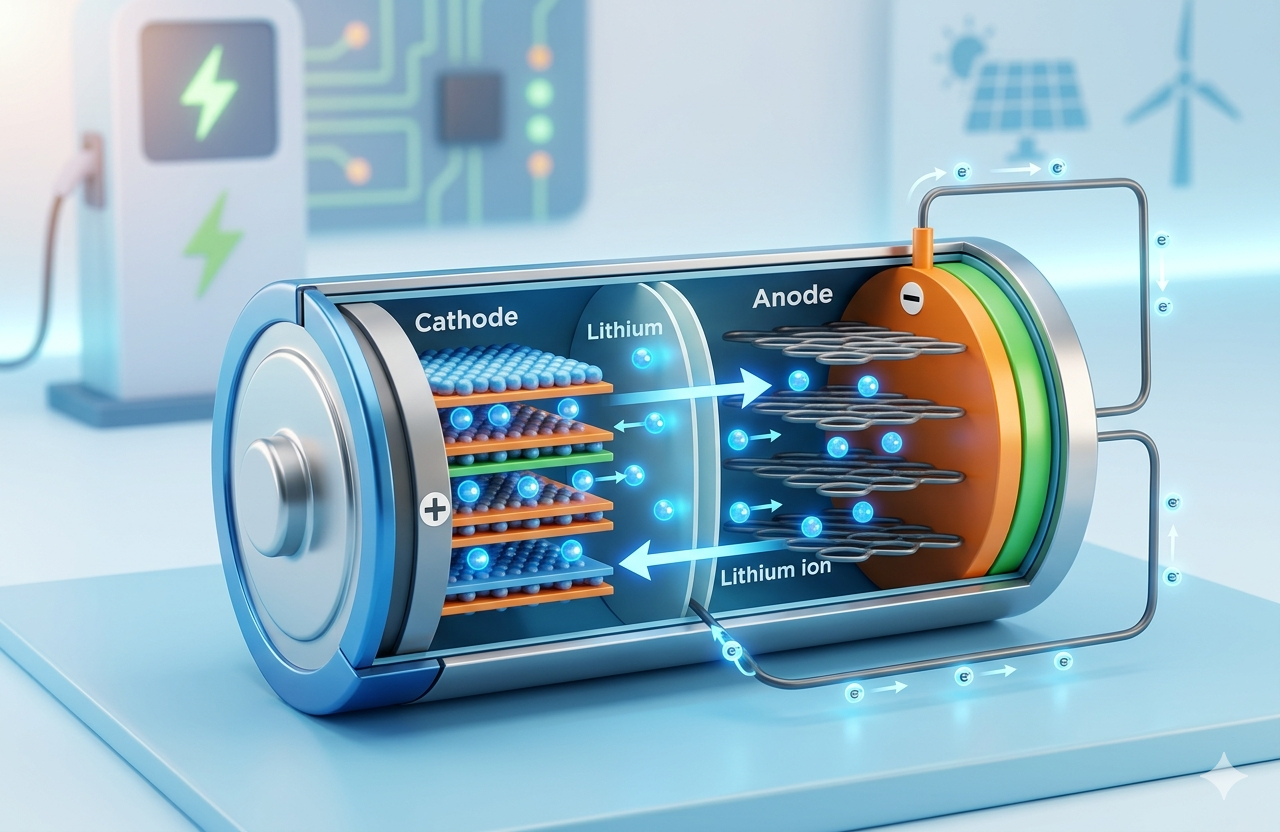
In today’s technology-driven world, energy storage plays a vital role in powering everyday devices. From remote controls and flashlights to laptops and electric vehicles, batteries are essential for modern living. Among the various types of batteries available, the rechargeable cell has become increasingly popular due to its efficiency, cost-effectiveness, and environmental benefits.
Unlike disposable batteries, rechargeable cells can be used multiple times by restoring their charge through an external power source. This not only reduces waste but also saves money over time. In this article, we will explore what a rechargeable cell is, how it works, its different types, advantages, disadvantages, and common applications.
What Is a Rechargeable Cell
A rechargeable cell, also known as a secondary cell, is a type of battery that can be recharged and reused multiple times. It stores electrical energy in the form of chemical energy and converts it back into electrical energy when needed.
When the battery is connected to a charger, the chemical reactions inside the cell are reversed, restoring its energy capacity. This process can be repeated hundreds or even thousands of times depending on the battery type and usage.
How Does a Rechargeable Cell Work
Rechargeable cells operate based on reversible chemical reactions. These reactions occur between the electrodes and the electrolyte inside the battery.
Charging Process
When a rechargeable cell is connected to a power source:
-
Electrical energy is supplied to the battery
-
Chemical reactions occur inside the cell
-
Energy is stored in chemical form
Discharging Process
When the battery is used:
-
Chemical energy converts back into electrical energy
-
Electrons flow through the external circuit
-
The device receives power
This cycle of charging and discharging can be repeated many times, making rechargeable cells highly efficient.
Types of Rechargeable Cells
There are several types of rechargeable cells, each designed for specific applications. Below are the most common ones:
1. Nickel Cadmium (NiCd) Cells
Nickel Cadmium batteries are one of the oldest types of rechargeable cells. They are known for their durability and ability to perform well in extreme temperatures.
Features:
-
Long lifespan
-
Fast charging capability
-
Memory effect issue
2. Nickel Metal Hydride (NiMH) Cells
NiMH batteries are an improved version of NiCd cells and are widely used in household devices.
Features:
-
Higher capacity than NiCd
-
Less harmful to the environment
-
Moderate self-discharge rate
3. Lithium Ion (Li-ion) Cells
Lithium-ion batteries are the most commonly used rechargeable cells today. They are found in smartphones, laptops, and electric vehicles.
Features:
-
High energy density
-
Lightweight design
-
No memory effect
-
Longer lifespan
4. Lithium Polymer (Li-Po) Cells
Lithium polymer batteries are similar to Li-ion but use a polymer electrolyte, making them flexible and lightweight.
Features:
-
Thin and flexible design
-
High energy efficiency
-
Used in drones and portable electronics
Advantages of Rechargeable Cells
Rechargeable cells offer several benefits that make them a preferred choice for many users.
Cost Effective
Although the initial cost may be higher, rechargeable cells save money in the long run because they can be reused many times.
Environment Friendly
They reduce the number of disposable batteries thrown away, helping to minimize environmental pollution.
High Performance
Rechargeable cells provide consistent power output and are suitable for high-drain devices like cameras and gaming controllers.
Convenience
With the ability to recharge at home, users do not need to frequently purchase new batteries.
Disadvantages of Rechargeable Cells
Despite their advantages, rechargeable cells also have some limitations.
Higher Initial Cost
Rechargeable batteries and chargers can be expensive upfront.
Self Discharge
Some types, especially NiMH batteries, lose charge even when not in use.
Limited Lifespan
Rechargeable cells can only be recharged a certain number of times before their performance declines.
Charging Time
Unlike disposable batteries, rechargeable cells require time to recharge, which can be inconvenient in urgent situations.
Common Uses of Rechargeable Cells
Rechargeable cells are used in a wide range of applications across different industries.
Household Devices
-
Remote controls
-
Flashlights
-
Clocks
-
Toys
Consumer Electronics
-
Smartphones
-
Laptops
-
Tablets
-
Cameras
Automotive Industry
Rechargeable cells are widely used in electric vehicles and hybrid cars.
Industrial Applications
-
Power tools
-
Backup power systems
-
Medical equipment
Tips for Maintaining Rechargeable Cells
Proper maintenance can extend the life and performance of rechargeable cells.
Avoid Overcharging
Always use a quality charger that automatically stops charging when the battery is full.
Store Properly
Keep batteries in a cool and dry place to prevent damage.
Use Regularly
Rechargeable cells perform better when used frequently rather than being left unused for long periods.
Avoid Deep Discharge
Do not completely drain the battery before recharging, especially for lithium-based cells.
Future of Rechargeable Cells
The future of rechargeable cell technology looks promising as researchers continue to develop more efficient and sustainable energy solutions. Innovations such as solid-state batteries and fast-charging technologies are expected to revolutionize the industry.
These advancements aim to provide:
-
Longer battery life
-
Faster charging times
-
Improved safety
-
Reduced environmental impact
As the demand for portable power continues to grow, rechargeable cells will play a crucial role in shaping the future of energy storage.
Conclusion
Rechargeable cells have transformed the way we power our devices by offering a reliable, cost-effective, and environmentally friendly alternative to disposable batteries. With various types available, each suited for specific needs, users can choose the right rechargeable cell based on their requirements.
While they come with some limitations, their long-term benefits far outweigh the drawbacks. By understanding how rechargeable cells work and following proper maintenance practices, users can maximize their efficiency and lifespan.
In a world that increasingly values sustainability and efficiency, rechargeable cells are not just a convenience but a necessity for modern living.

 English
 Arabic
 French
 Spanish
 Portuguese
 Turkish
 Dutch
Dutch
 Italiano
 Russian
 Romaian
 Portuguese (Brazil)
 Greek
Greek