


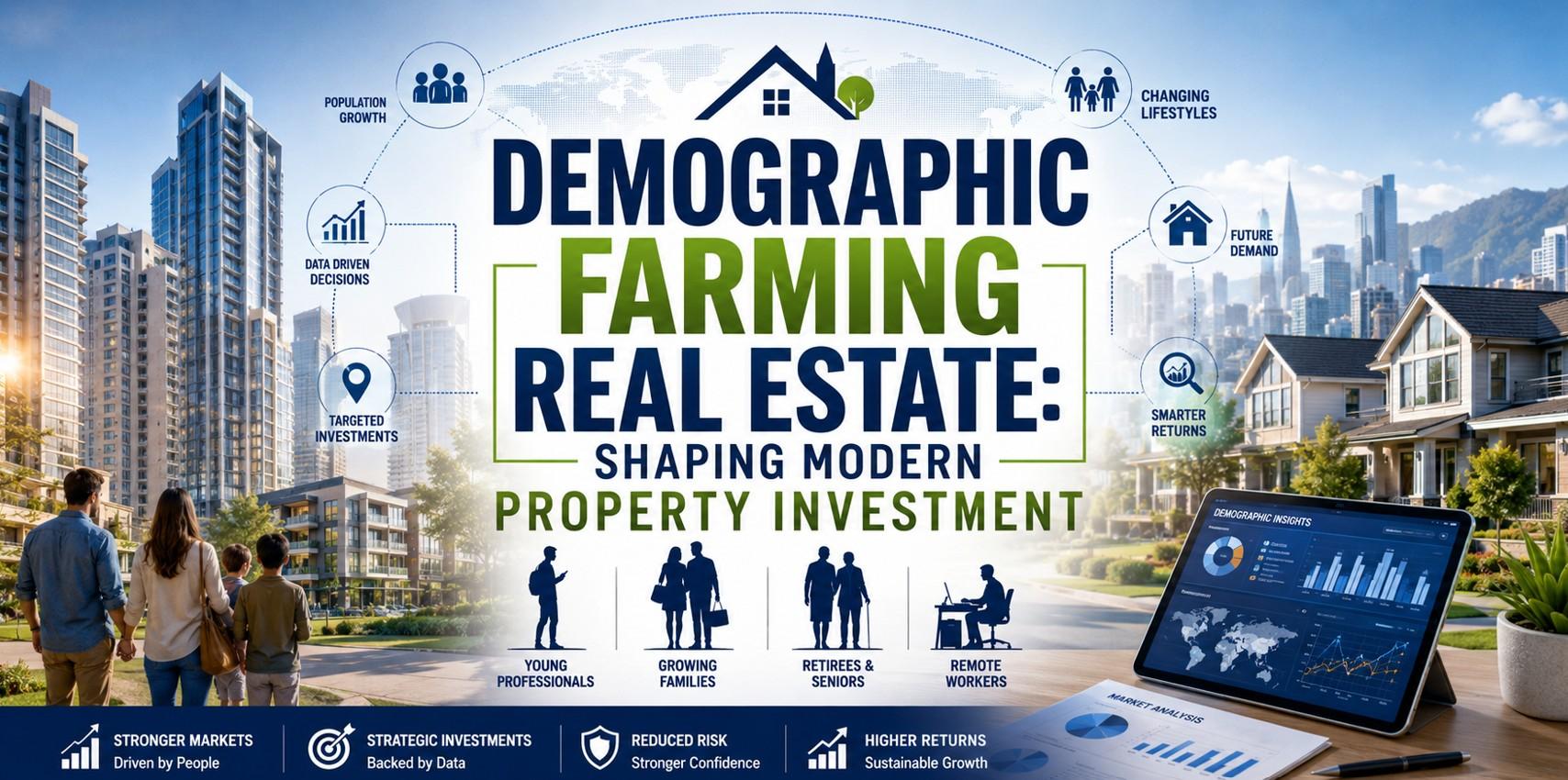
The real estate market is constantly evolving, and investors who understand emerging trends often gain a significant advantage. One concept that has gained increasing attention in recent years is demographic farming real estate. Unlike traditional investment approaches that focus primarily on location and property type, demographic farming centers on understanding population trends and using that knowledge to make informed real estate decisions.
As demographics continue to influence housing demand, commercial development, and community growth, investors, developers, and real estate professionals are turning to demographic farming as a powerful strategy for long term success.
What Is Demographic Farming Real Estate?
Demographic farming real estate refers to the practice of analyzing specific population groups and their characteristics to identify profitable real estate opportunities. Instead of targeting a broad market, investors focus on demographic segments such as age, income level, family size, occupation, education, and lifestyle preferences.
The goal is to understand where demand is likely to increase and invest in properties that meet the needs of growing populations. This data driven approach allows investors to anticipate market changes rather than simply reacting to them.
For example, an area experiencing a rapid increase in young professionals may create demand for modern apartments and mixed use developments. Similarly, communities with growing retiree populations may require senior housing, healthcare facilities, and age friendly neighborhoods.
Why Demographics Matter in Real Estate
Real estate values are heavily influenced by people. Population growth, migration patterns, and lifestyle changes directly affect housing demand and property appreciation.
When a particular demographic group moves into an area, local businesses, schools, healthcare providers, and infrastructure often expand to accommodate new residents. This growth can increase property values and create attractive investment opportunities.
Demographic data helps investors answer important questions such as:
-
Who is moving into the area?
-
What type of housing do they need?
-
What services and amenities are they seeking?
-
How will population trends affect future property demand?
By understanding these factors, investors can make more strategic decisions and reduce investment risks.
Key Demographic Trends Driving Real Estate Markets
Several demographic trends are currently shaping real estate markets worldwide.
Population Growth
Areas with steady population growth typically experience increased demand for residential and commercial properties. Investors often look for regions with strong job creation and economic development because these factors attract new residents.
Aging Population
Many countries are experiencing significant growth in older age groups. This trend is creating demand for retirement communities, assisted living facilities, healthcare centers, and accessible housing options.
Urban Migration
Younger generations often prefer living in urban centers with convenient access to employment, entertainment, and public transportation. This migration pattern supports demand for apartments, condominiums, and mixed use developments.
Remote Work Expansion
The rise of remote work has changed housing preferences. Many professionals now seek larger homes in suburban or secondary markets where they can enjoy more space and lower living costs while maintaining flexible work arrangements.
Benefits of Demographic Farming in Real Estate
Demographic farming offers several advantages for investors and real estate professionals.
Better Investment Decisions
Population data provides valuable insights into future demand. Investors can identify promising markets before they become highly competitive.
Reduced Risk
Understanding demographic shifts helps investors avoid markets facing population decline or changing economic conditions that may negatively impact property values.
Higher Returns
Properties that align with demographic needs often experience stronger occupancy rates, rental income, and appreciation over time.
Improved Marketing Strategies
Real estate agents and developers can tailor marketing campaigns to specific demographic groups, increasing engagement and conversion rates.
How to Implement a Demographic Farming Strategy
Successfully applying demographic farming requires careful research and planning.
Start by analyzing local population data from reliable sources. Study age distribution, household income, employment trends, educational attainment, and migration patterns.
Next, identify emerging demographic groups within target markets. Consider how their needs may influence future housing demand.
Evaluate local infrastructure, schools, healthcare facilities, transportation networks, and commercial developments. These factors often indicate whether an area is prepared to support population growth.
Finally, align property investments with the needs of the target demographic. For example, growing families may seek larger homes near schools, while young professionals may prefer apartments near business districts and entertainment hubs.
Challenges to Consider
Although demographic farming can be highly effective, it is not without challenges.
Demographic trends can change due to economic shifts, government policies, or unexpected events. Investors must regularly monitor market conditions and update their strategies accordingly.
Additionally, relying solely on demographic data may overlook other important factors such as local regulations, interest rates, and property market cycles. A balanced approach that combines demographic analysis with traditional market research often delivers the best results.
The Future of Demographic Farming Real Estate
As technology and data analytics continue to advance, demographic farming is expected to become even more important in real estate decision making. Investors now have access to sophisticated tools that provide detailed insights into population behavior, migration patterns, and consumer preferences.
The ability to predict where people will live, work, and spend their time will remain a valuable advantage in an increasingly competitive market. Those who understand demographic trends and adapt their strategies accordingly will be better positioned to identify profitable opportunities and achieve sustainable growth.
Conclusion
Demographic farming real estate represents a modern, data driven approach to property investment. By focusing on population trends and understanding the needs of specific demographic groups, investors can uncover opportunities that might otherwise go unnoticed.
Whether targeting growing families, young professionals, retirees, or remote workers, demographic insights provide a clearer picture of future demand. As real estate markets continue to evolve, demographic farming will remain a key strategy for investors seeking long term success and stronger returns.
Frequently Asked Questions
What is demographic farming in real estate?
Demographic farming is the process of analyzing population characteristics and trends to identify profitable real estate investment opportunities and target specific market segments.
Why is demographic data important for property investors?
Demographic data helps investors understand future housing demand, reduce risk, and select properties that align with population growth and lifestyle trends.
Which demographic factors are most important in real estate?
Key factors include age, income levels, family size, employment trends, education, migration patterns, and population growth.
Can demographic farming improve real estate marketing?
Yes. By understanding the preferences of specific demographic groups, real estate professionals can create targeted marketing campaigns that attract qualified buyers and tenants.

 English
 Arabic
 French
 Portuguese
 Deutsch
 Turkish
 Dutch
Dutch
 Italiano
 Russian
 Romaian
 Portuguese (Brazil)
 Greek
Greek