


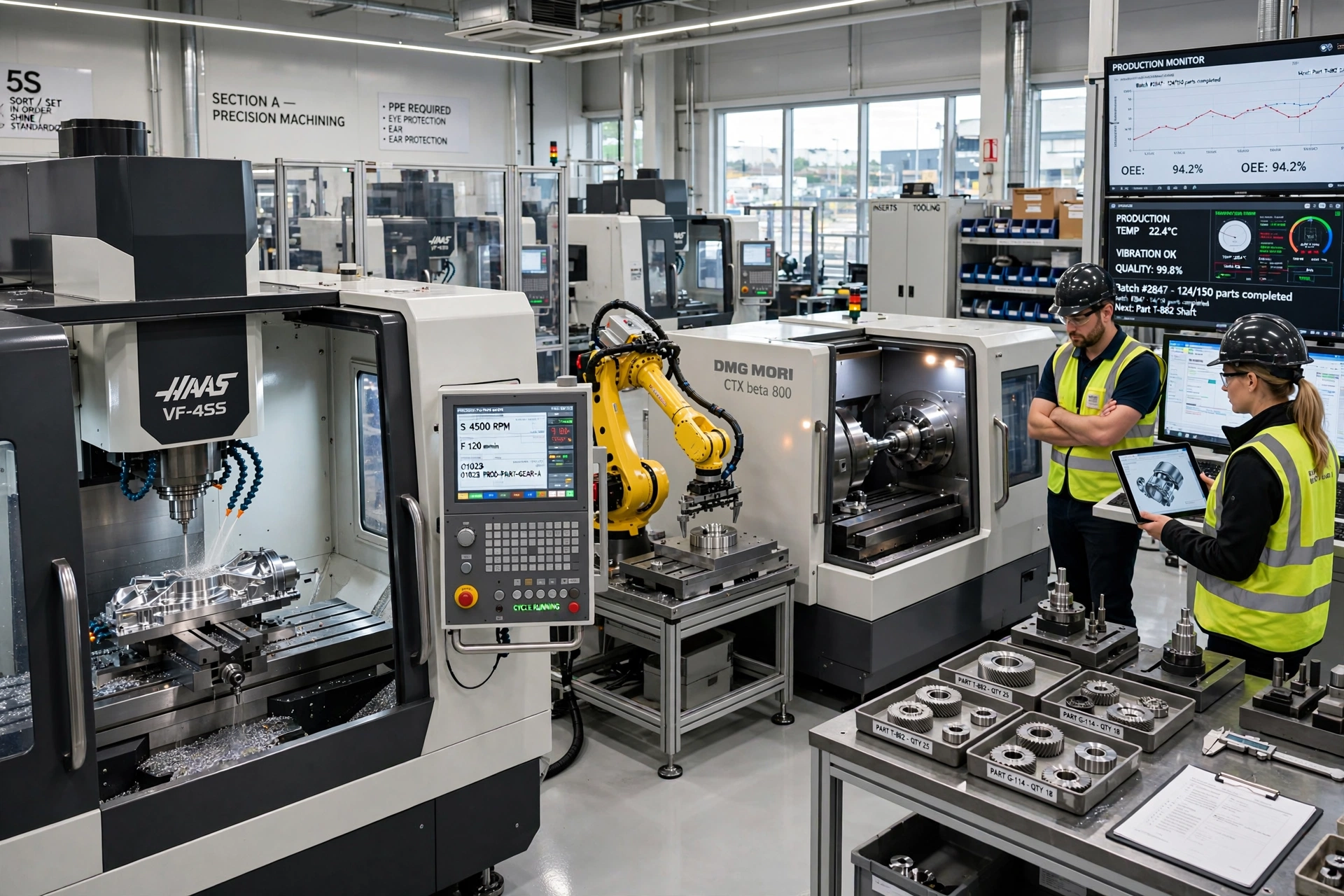
Any industry that utilizes precision components, from aerospace to oil and gas, uses precision machining services to convert raw materials into useful components. However, all claims of precision may not always stand the test of time. This guide is dedicated to explaining the process, the criteria used, and how to select the right service provider.
Understanding Precision Machining as a Manufacturing Process
Precision machining is the process of removing material from a part using machine tools that are controlled by CNC. Precision machining is different from processes such as casting and stamping because machining entails shaping the material by cutting rather than pressing or heating it. The advantage of this process is that precise dimensioning of the part is possible, down to fractions of millimeters.
The need for such precision is crucial when the machined part needs to interact with other parts with absolute precision. Examples include bearing surfaces, valve seats, and connectors.
Equipment and Technology Behind the Process
High-accuracy machining processes involve the integration of both hardware and software as follows:
-
3-axis and 5-axis CNC machine tools to cater to different complexities of parts
-
CAD/CAM software to translate designs into motion commands
-
In-process probing to validate the dimension at the time of the machining process itself, and not afterwards
-
CMMs for final verification against drawings
The shops where in-process probing and post-machining validation via CMM are integrated will detect faults early enough to keep the scrap and rework rates low in a batch process.
Why Sharjah Has Become a Regional Machining Base
More and more purchasers who require machining jobs that require precision are now turning to manufacturing firms located in Sharjah, lured by the emirate’s industrial base, access to ports, and comparatively low operating costs. There are several free zones in Sharjah, including Hamriyah and SAIF, which have successfully lured machining facilities that have their own computerized numerical control machines to serve clients throughout the GCC and even beyond.
The presence of such firms in a particular industrial zone enables buyers to easily conduct audits and inspections.
Tolerances, Materials, and Realistic Expectations
-
Tolerances that can be achieved differ greatly according to material type and the shape of the part:
-
±0.01 mm to ±0.03 mm is usually achievable for aluminum parts
-
Stainless steel requires somewhat higher tolerances due to increased wear and heat generation during machining
-
Thin-walled or long and slender parts may require additional fixturing to maintain tolerances while cutting
A reputable manufacturer will always discuss such limitations before making promises he cannot keep.
Quality Assurance That Actually Protects Your Project
Good machining vendors support their operations by providing documentation of quality controls, such as:
-
First article inspection before mass production
-
Certificates of material from the original supplier or mill
-
Process control statistics for future orders
-
Non-conformances if a batch fails inspection
Request these documents before you make your first purchase from a vendor, as this will likely give the best indication of how well they will deal with issues in the future. Other important factors to look out for include some common errors made by buyers in machining, which include over-specifying tolerances on unnecessary dimensions, picking a vendor based only on price without confirming their inspection capabilities, and expecting each precision shop to have the same tolerances.
Choosing the Right Machining Partner With Confidence
Value from precision machining can only be achieved through the correct combination of equipment, realistic tolerances, and quality documentation. When looking at manufacturing companies in Sharjah or anywhere else in the region, place emphasis on the inspection results rather than on the marketing slogans. Have a supplier provide you with a quote and specify all the details for your next order.
Frequently Asked Questions
1. What industries rely most on this manufacturing process?
Precision-machined parts are widely used in aerospace, oil & gas, automotive, and medical device manufacturing industries.
2. How do I evaluate a supplier's machining capability?
Ask for the inspection certificate of your first part, materials certification, and proof of your industry experience before placing the full order.
3. Why are manufacturing companies in Sharjah popular for this work?
The cost advantage, well-developed free zones, and good ports make Sharjah an attractive place for machine shops.
4. Is precision machining suitable for both prototypes and mass production?
Yes, the same machine tools may be used both for prototypes and production parts; however, the price per piece depends on the quantity.
5. What is the typical turnaround time for these orders?
Typical delivery time is from two to four weeks.

 English
 French
 Spanish
 Portuguese
 Deutsch
 Turkish
 Dutch
Dutch
 Italiano
 Russian
 Romaian
 Portuguese (Brazil)
 Greek
Greek