


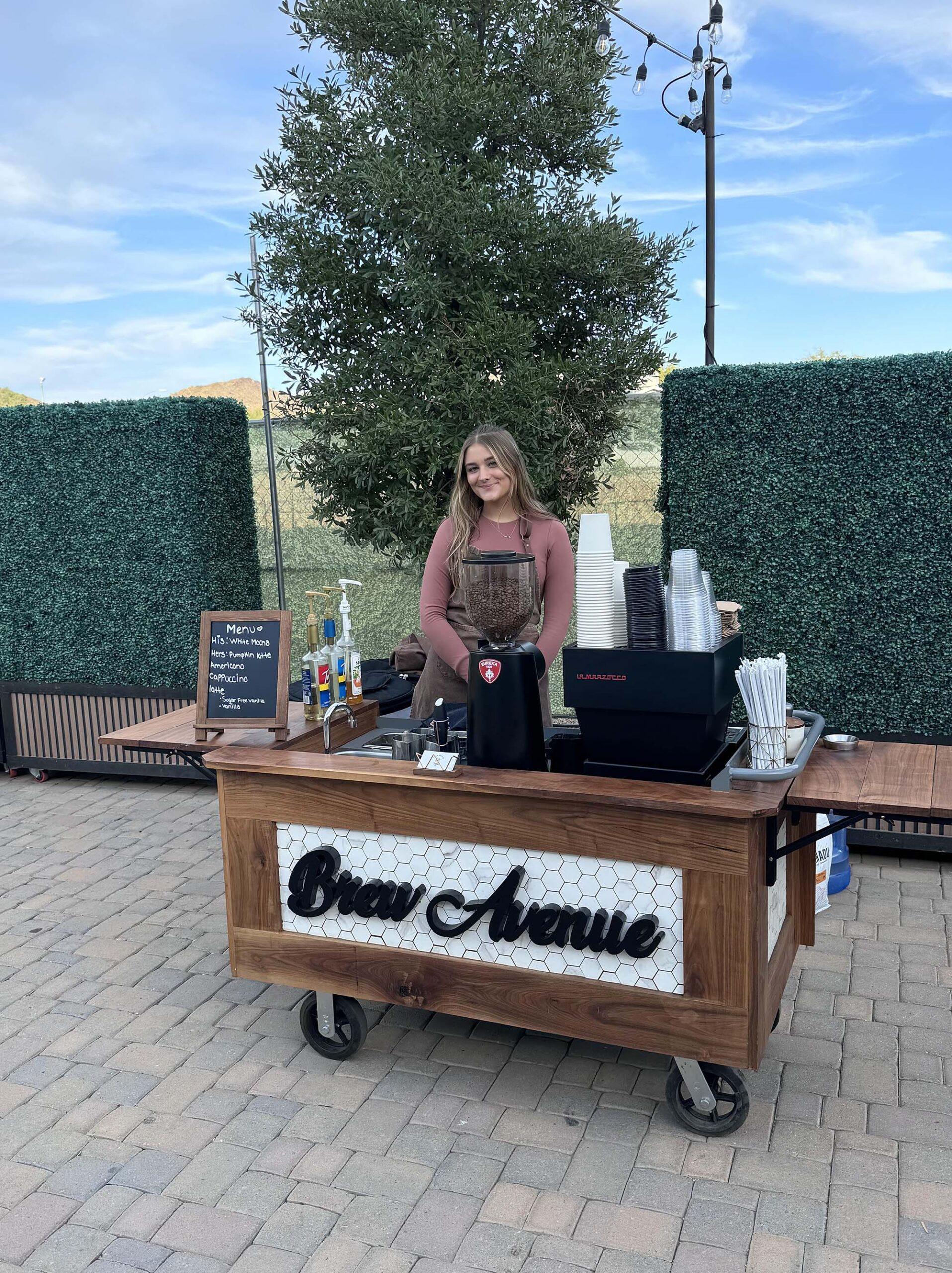
The afternoon session of a conference is a battlefield. Heads nod. Eyes glaze. The speaker tries valiantly, but the post‑lunch slump is undefeated. Most coffee breaks make it worse—warm airpots, stale brew, and a long line that frustrates instead of refreshes. A truly energizing coffee break requires strategy, not just caffeine. Professional coffee catering can transform that sleepy slump into a burst of productivity and networking. Brew Avenue Coffee designs conference coffee breaks that work. We are located in Phoenix, Arizona, United States, and our mobile cart turns tired attendees into engaged participants.
Why Most Conference Coffee Breaks Fail
Traditional conference coffee breaks suffer from three fatal flaws. First, the coffee is brewed too early and held in airpots, becoming bitter and lukewarm. Second, the line is a single slow crawl, wasting precious break time. Third, there is no theater—no excitement to wake up the senses. Consequently, attendees grab a cup, retreat to a corner, and count the minutes until the next session .
Our coffee catering Service solves each problem with a fresh approach.
Step 1: Time the Break Strategically
The worst time for a coffee break is immediately after lunch. Attendees are already sitting, and the line forms instantly. Instead, schedule a 20‑minute “energy window” 90 minutes after lunch. This captures the natural circadian dip. Additionally, offer a second short break (10 minutes) mid‑afternoon for a cold brew pickup .
Because we are located in Phoenix, Arizona, United States, we also consider temperature. In summer, schedule breaks indoors with cold brew emphasis. In winter, hot lattes shine.
Step 2: Choose the Right Beverage Mix
A conference crowd has diverse needs. Some want a strong espresso to power through the next session. Others want a refreshing cold brew. Some need decaf. A few want tea or matcha.
We recommend a three‑station approach:
-
Espresso station – Hot lattes, cappuccinos, americanos (one barista)
-
Cold brew station – Nitro cold brew, iced coffee (second barista or self‑serve tap)
-
Tea and decaf station – Herbal teas, decaf espresso, hot chocolate
This triage reduces lines by 60% and ensures every attendee finds their ideal pick‑me‑up .
Step 3: Design the Flow for Speed
A slow line kills energy. We use a split workflow that triples speed. One barista takes orders and payments. A second barista pulls shots and steams milk. A third (for large conferences) handles pickup. For cold brew, we offer self‑serve taps with pre‑chilled cups .
We also implement a pre‑order option via the conference app. Attendees order during the previous session and receive a text when their drink is ready. The physical line disappears entirely .
Step 4: Add Sensory Boosters
Caffeine alone is not enough. The environment must signal alertness. We position our cart with bright, cool lighting (5000K) that mimics daylight. We play upbeat, lyric‑free music at moderate volume. The aroma of fresh grinding fills the air. These sensory cues wake up the brain before the first sip .
Because we are located in Phoenix, Arizona, United States, we also use misting fans for outdoor conference breaks. The cool mist on the face is an instant energizer .
Step 5: Train Baristas for Engagement
A grumpy, rushed barista deflates energy. Our baristas are trained to be energizers—they smile, make eye contact, and offer a quick word of encouragement: “You’ve got this next session!” They also remember names of repeat customers, creating a personal connection that lifts mood .
Step 6: Provide a “Takeaway” Option
Many attendees will want to bring coffee into the next session. We offer spill‑proof lids and cup sleeves with the conference logo. We also provide small 4‑ounce “taste” cups for those who want just a sip. This prevents half‑full cups from being abandoned on session tables.
Step 7: Measure and Adjust
After each break, we report to the conference organizer: number of drinks served, peak line length, most popular beverage. This data helps refine timing for the next day. Over three days, we consistently reduce wait times by 30%.
Real‑World Success
A 2,000‑attendee tech conference in Phoenix used our plan. They replaced a single, slow airpot station with our three‑station cart setup. Post‑break session attendance increased by 22%. Attendee surveys rated the coffee break as the “most energizing” part of the conference .
Conclusion
A conference coffee break should not be a sleepy afterthought. With strategic timing, a diverse beverage mix, efficient flow, sensory boosters, engaging baristas, and takeaway options, you can turn that break into a productivity powerhouse. Brew Avenue Coffee brings this expertise to every conference we serve. Whether you need a single cart or a multi‑station setup, we energize your attendees. We are located in Phoenix, Arizona, United States, and we are ready to plan your best coffee break yet.
Frequently Asked Questions
1. How many coffee carts do I need for a 500‑person conference?
We recommend two carts or one cart with three stations (espresso, cold brew, tea/decaf). For 1,000+, three carts .
2. What is the ideal break length?
Twenty minutes. Shorter breaks create long lines; longer breaks lose session momentum. We can serve 200 drinks in 20 minutes with proper setup .
3. Can you handle back‑to‑back sessions with multiple breaks?
Yes. We stay for the entire conference day. Our battery lasts six hours; we bring spares for all‑day events .
4. How do you prevent lines from forming?
Pre‑ordering via app eliminates the physical line. For those who order on‑site, our split workflow keeps waits under 2 minutes .
5. Do you offer decaf for afternoon breaks?
Yes. We recommend a 50/50 split of regular and decaf for afternoon breaks. Many attendees want the ritual without the caffeine .
6. How far in advance should I book for a multi‑day conference?
Six to eight weeks. This allows time for menu customization, app integration, and staffing .

 Arabic
 French
 Spanish
 Portuguese
 Deutsch
 Turkish
 Dutch
Dutch
 Italiano
 Russian
 Romaian
 Portuguese (Brazil)
 Greek
Greek