


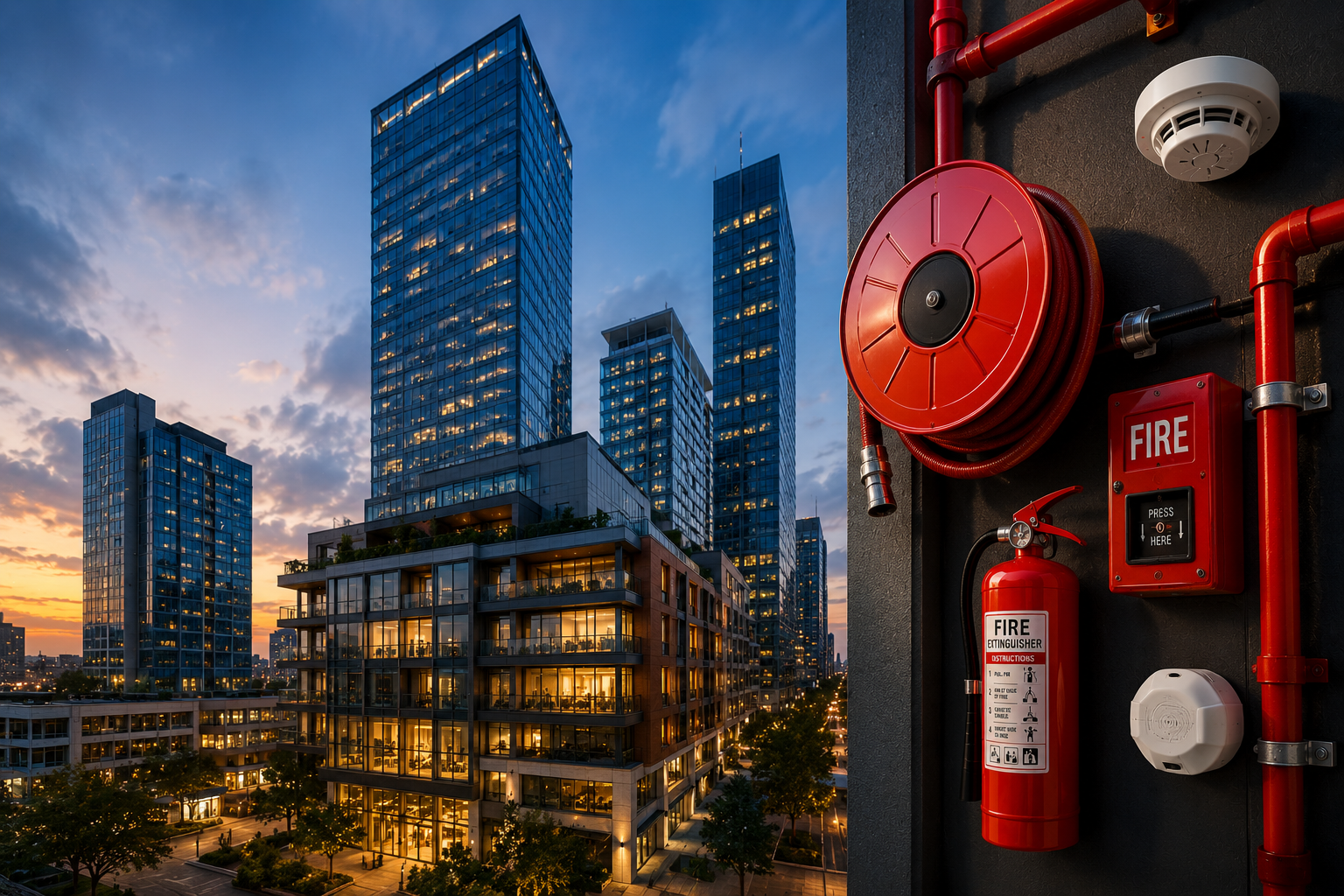
Ask a fire protection engineer which document sits open on their desk most often, and the answer is almost always an NFPA standard. The National Fire Protection Association publishes more than 300 codes and standards, covering everything from sprinkler design to emergency lighting, and even experienced project teams get confused about which ones actually apply to their building. Understanding NFPA’s role and how it fits alongside local codes saves real money once construction starts.
What NFPA actually governs
NFPA isn’t one code. It’s a whole library. NFPA 101, the Life Safety Code, covers means of egress and occupant protection. NFPA 13 governs sprinkler design. NFPA 72 sets out fire alarm and signalling requirements, and NFPA 80 covers fire doors and windows. In many countries outside the US, these aren’t the primary legal codes, but they get referenced constantly inside local frameworks. Documentation for UAE developments routinely cites NFPA 13 for sprinklers and NFPA 101 for interior finishes, alongside the UAE Fire and Life Safety Code of Practice.
NFPA 101 covers egress and occupant protection. NFPA 13 covers sprinkler installation. NFPA 72 covers fire alarm and signalling systems. NFPA 80 covers fire doors and opening protectives.
Where NFPA and local building codes overlap
This is where people get tripped up. A local building code sets the legal minimum for a jurisdiction. An NFPA standard describes how a specific system actually gets designed, installed, tested, and maintained. Local authorities often adopt NFPA standards by reference instead of rewriting the technical content themselves, so a fire alarm system might be legally required under a national building code, but the detector spacing and testing intervals come straight from NFPA 72. Skip that NFPA layer and read only the local summary, and you end up with a system that passes a quick review but fails a detailed inspection.
Mistakes that keep showing up
A few patterns repeat across projects. Teams use an outdated edition of a standard that’s since been superseded, since NFPA revises most documents every three to four years. They mix up related standards, treating NFPA 25 (inspection and maintenance of water-based systems already in service) as if it were NFPA 13 (design and installation of new ones). They overlook occupancy-specific provisions buried inside NFPA 101, which shift meaningfully between healthcare, assembly, and business occupancies. And they design an NFPA-based system without checking whether a local amendment has modified the clause they’re relying on.
Why the edition year actually matters
Citing “NFPA 13” without an edition year is a bit like citing “the law” without saying which year. Sprinkler density requirements, hazard classifications, and even basic definitions shift between editions. A design built on an edition several cycles old can miss current expectations even though it references the right standard number. Authorities having jurisdiction usually name which edition is currently adopted, so it’s worth confirming that at project start rather than assuming nothing’s moved since the last job.
Getting Fire Safety Advisory and Consulting support that actually maps NFPA to local rules
Interpreting which NFPA standards apply and how they interact with local amendments is exactly the kind of work Fire Safety Advisory and Consulting exists for. A good Fire Safety Consulting team starts by mapping every applicable NFPA standard against the local code framework, then flags conflicts before they land on the design table. This matters most on complex or mixed-use projects, where several occupancy types trigger different NFPA provisions inside the same building. Getting that mapping right early, with proper Fire Safety Advisory and Consulting input from the outset, avoids the far costlier process of retrofitting systems after a failed commissioning test.
Conclusion
NFPA standards give designers a solid, detailed technical foundation, but only when the right standard, the right edition, and the right occupancy provisions are applied together. Miss any one of those, and an otherwise sound design can fall apart at review. Working with a Fire Safety Advisory and Consulting team that tracks edition updates and cross-checks local amendments takes a lot of that risk off a project team’s plate, and it’s worth having that conversation before system design gets locked in.
FAQs
1. Is NFPA a mandatory code everywhere?
No. NFPA standards come out of the United States, but many countries adopt specific standards by reference in their own building or fire codes. That’s common practice across the Middle East, Asia and the Americas.
2. How often are NFPA standards updated?
Most get revised every three to four years, though the exact timing varies by document. Confirm which edition is currently adopted by the local authority having jurisdiction.
3. What’s the difference between NFPA 13 and NFPA 25?
NFPA 13 governs the design and installation of new sprinkler systems. NFPA 25 covers the ongoing inspection, testing, and maintenance of water-based systems already in service.
4. Do NFPA standards apply to existing buildings or just new construction?
Many NFPA standards, particularly ones covering inspection and maintenance, apply directly to existing buildings and systems, not only to new construction.
5. Who decides which NFPA edition applies to my project?
The authority having jurisdiction in your region usually specifies the adopted edition, so confirm this with them or with your consultant at the outset.

 English
 French
 Spanish
 Portuguese
 Deutsch
 Turkish
 Dutch
Dutch
 Italiano
 Russian
 Romaian
 Portuguese (Brazil)
 Greek
Greek