


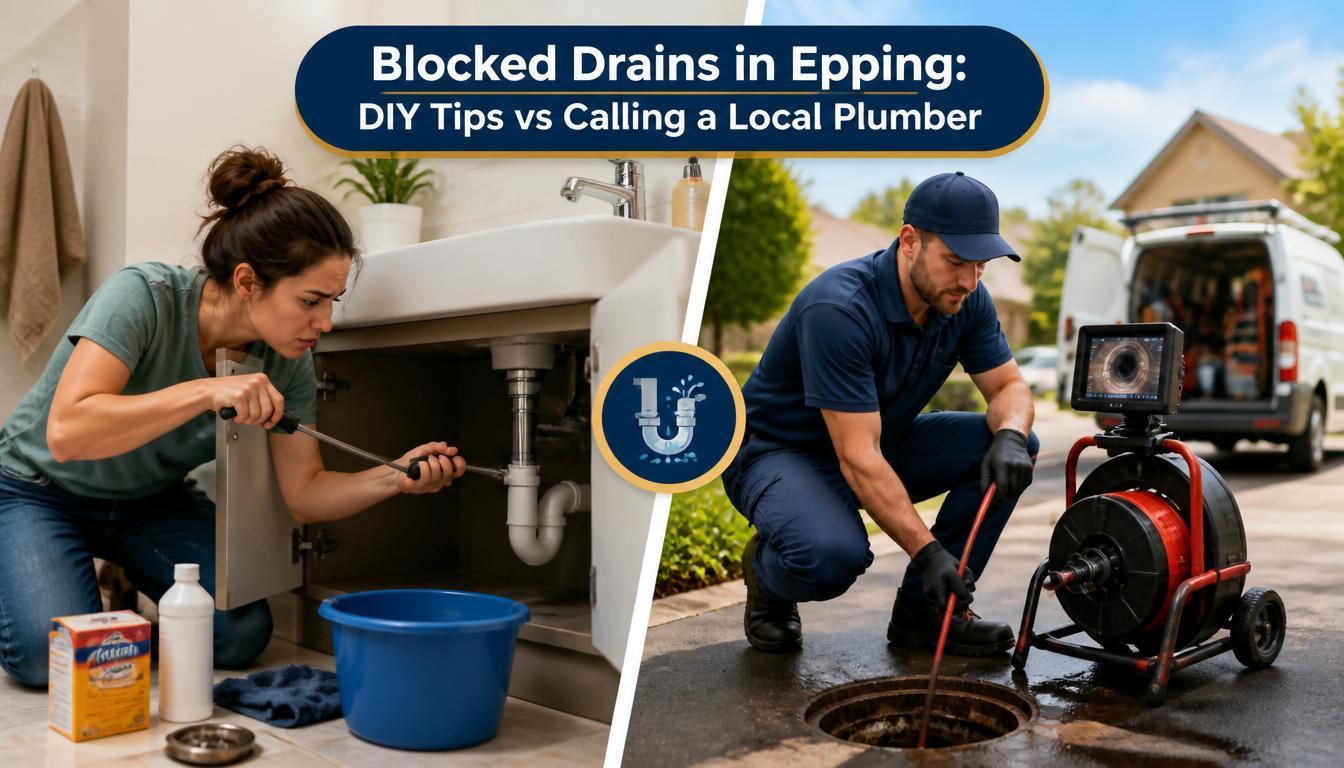
DIY works fine for small, single-drain blockages like hair or light grease buildup. But if it's recurring, affecting multiple drains, or you're getting smells and gurgling sounds, that's when it's time to stop trying things at home and get a professional in. Here's how to tell the difference.
When DIY Is Worth Trying
A plunger works well for simple blockages in sinks, showers, and toilets. It's usually the first thing worth trying, and it's free.
Hot water poured slowly down the drain can help break up light grease buildup in kitchen pipes, especially if caught early.
Clearing the plug hole by hand — removing visible hair or debris sitting right at the drain opening — solves a surprising number of "blocked" sinks and showers.
Baking soda and vinegar is a mild option some people use for minor buildup, though it won't do much for anything solid or further down the pipe.
These are all worth a try when the blockage is minor, recent, and limited to one fixture.
When DIY Stops Being Worth It
If you've tried the basics a couple of times and nothing's changed, that's usually the point to stop. Repeatedly plunging or pouring chemical drain cleaners down the pipe doesn't fix a deeper blockage — it just delays dealing with it, and chemical cleaners can actually damage older pipes over time.
Other signs it's beyond DIY:
-
The blockage keeps coming back after clearing it
-
Multiple drains are slow or blocked at the same time
-
Water is backing up through the toilet or another fixture
-
There's a persistent bad smell that won't go away
-
Gurgling sounds keep happening
These usually mean the issue is further down the pipe than a plunger or DIY method can reach — often tree roots, a damaged pipe, or a main sewer line issue.
What a Local Plumber Can Actually Do That DIY Can't
Drain cleaning / electric eel — clears blockages deeper in the pipe that a plunger simply can't reach.
High-pressure water jetting — clears tougher, compacted buildup and helps prevent it from returning quickly.
CCTV camera inspection — shows exactly what's happening inside the pipe, whether it's roots, cracks, or a collapsed section, instead of guessing.
Pipe relining or repair — fixes damaged pipes from the inside without digging up the yard, which DIY obviously can't do.
The Risk of Sticking With DIY Too Long
The main risk isn't wasting a bit of time — it's letting a small blockage turn into a bigger one. What starts as a slow drain can end up as a burst pipe, water damage, or a collapsed sewer line if it's left too long. At that point, the fix costs a lot more than it would have earlier on.
When to Call Epping Blocked Drain Specialist
-
DIY methods haven't worked after a couple of tries
-
The blockage keeps returning
-
Multiple drains are affected
-
It's an emergency and can't wait for business hours
Epping Blocked Drain Specialist is a licensed, family-owned business offering 24/7 emergency service with a $0 call-out fee, so getting a proper look at the problem doesn't cost anything upfront — even if DIY was your first move.
FAQs
Is it safe to use chemical drain cleaners?
They can help with very minor blockages, but repeated use can damage older pipes, and they won't fix a deeper or recurring blockage.
How many times should I try DIY before calling someone?
If a plunger or hot water hasn't worked after a couple of attempts, it's not likely to work with more tries — that's the point to call a professional.
Can DIY methods damage my pipes?
Yes, particularly chemical cleaners used repeatedly, or forceful plunging on older, more fragile pipes.
Does it cost anything to just get a plumber to look at it?
Not with Epping Blocked Drain Specialist — the call-out fee is $0, so there's no cost just to get it checked and diagnosed.

 English
 French
 Spanish
 Portuguese
 Deutsch
 Turkish
 Dutch
Dutch
 Italiano
 Russian
 Romaian
 Portuguese (Brazil)
 Greek
Greek