


INTRODUCTION
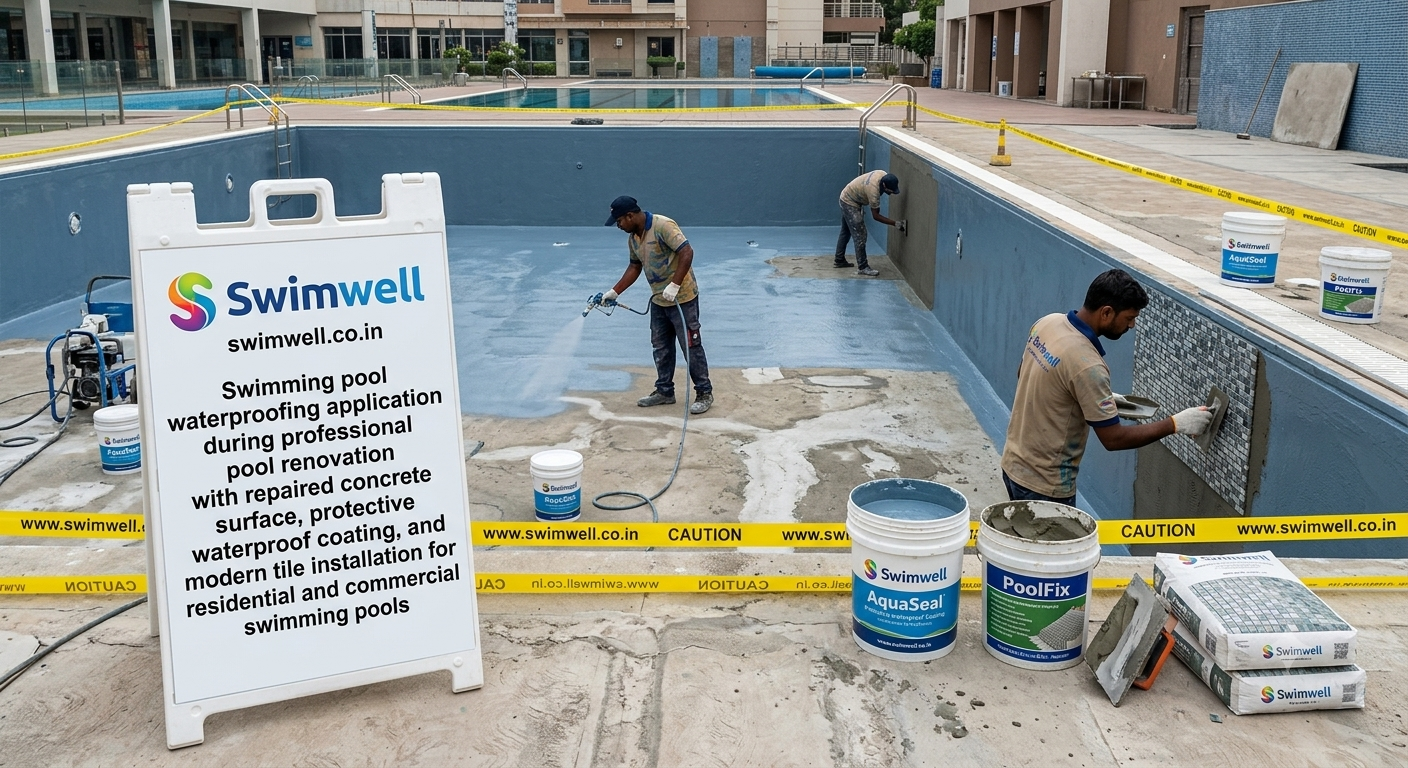
Swimming pool waterproofing is one of the most important aspects of any swimming pool renovation project. Over time, swimming pools are exposed to constant water pressure, changing weather conditions, chemical treatments, and regular usage, all of which can gradually affect the structural integrity of the pool. During renovation, waterproofing serves as a protective barrier that prevents water seepage, strengthens the structure, and extends the lifespan of the pool.
Whether renovating a residential backyard pool or upgrading a large commercial swimming facility, professional waterproofing ensures that the renovated pool remains durable, attractive, and functional for years. It is an essential part of restoring aging pools and preparing them for modern finishes, equipment, and long-term performance.
Why Waterproofing Is Essential During Pool Renovation
Swimming pools naturally experience wear over time. Small cracks, aging finishes, and moisture penetration can develop without being immediately visible. Renovation provides the ideal opportunity to inspect the structure and apply new waterproofing systems before installing fresh finishes.
Proper waterproofing offers several important advantages, including:
- Preventing water leakage
- Protecting structural concrete
- Reducing moisture penetration
- Supporting new surface finishes
- Improving overall durability
- Extending the life of the swimming pool
By addressing these issues during renovation, property owners can restore the pool while improving its long-term reliability.
Common Reasons Pools Need Renovation
Swimming pools require renovation for various reasons beyond cosmetic improvements.
Some common reasons include:
- Aging construction materials
- Cracked interior finishes
- Water seepage
- Surface discoloration
- Worn tiles
- Damaged expansion joints
- Outdated plumbing systems
- Equipment upgrades
- Structural movement
- Modern design improvements
Waterproofing is often incorporated alongside these renovation tasks to provide comprehensive protection.
How Waterproofing Protects the Pool Structure
The primary function of waterproofing is to prevent water from entering or escaping through the pool shell.
Without proper waterproofing, water can gradually penetrate concrete surfaces, leading to:
- Structural weakening
- Reinforcement corrosion
- Surface damage
- Interior deterioration
- Persistent leaks
- Increased maintenance requirements
Applying a high-quality waterproofing system creates a durable barrier that protects the pool from these issues.
Inspection Before Waterproofing
Before renovation begins, professionals perform a thorough inspection to identify existing structural concerns.
Typical inspections include:
- Crack assessment
- Surface condition evaluation
- Tile inspection
- Expansion joint examination
- Water leakage detection
- Plumbing inspection
- Structural integrity review
These evaluations help determine the most suitable waterproofing solution for the pool.
Surface Preparation
Proper preparation is essential for successful waterproofing.
The preparation process generally includes:
- Removing damaged finishes
- Cleaning the surface
- Repairing cracks
- Leveling uneven areas
- Removing loose materials
- Preparing joints and corners
A clean and stable surface allows waterproofing materials to bond effectively.
Types of Swimming Pool Waterproofing Systems
Several waterproofing methods are used during swimming pool renovations depending on the condition and design of the pool.
Common systems include:
Cementitious Waterproofing
Cement-based waterproof coatings are widely used due to their strong adhesion and durability. They create a protective layer over the pool structure before tile installation or interior finishing.
Flexible Waterproof Membranes
Flexible membranes accommodate slight structural movement while maintaining water resistance. These systems are particularly effective for pools exposed to temperature changes.
Crystalline Waterproofing
Crystalline waterproofing penetrates concrete surfaces and forms crystals that block microscopic pores, helping prevent water penetration from within the concrete itself.
Polymeric Waterproof Coatings
Polymer-enhanced waterproofing systems provide additional flexibility, durability, and excellent adhesion to prepared pool surfaces.
Professional selection depends on the pool's construction, renovation goals, and environmental conditions.
Waterproofing Supports Modern Pool Renovations
Today's pool renovations often include more than structural repairs. Many projects also incorporate modern features that benefit from a properly waterproofed foundation.
These upgrades may include:
- Glass mosaic tiling
- LED lighting
- Infinity edges
- Decorative water features
- Spa integration
- Automatic cleaning systems
- Smart pool automation
- Energy-efficient circulation equipment
A reliable waterproofing system helps protect these new installations and supports long-term performance.
Residential Pool Renovation Benefits
For residential pools, waterproofing improves both appearance and functionality.
Homeowners benefit from:
- Longer-lasting finishes
- Reduced water seepage
- Improved durability
- Better protection against weather exposure
- Enhanced structural stability
- Easier future maintenance
Waterproofing also helps preserve decorative tiles and premium interior finishes.
Commercial Pool Renovation Benefits
Commercial swimming pools experience continuous use, making waterproofing even more important.
Commercial properties such as hotels, resorts, sports clubs, schools, and apartment complexes benefit from:
- Increased structural protection
- Reliable long-term performance
- Reduced operational interruptions
- Enhanced durability
- Better resistance to heavy usage
- Improved maintenance efficiency
These advantages contribute to the smooth operation of commercial aquatic facilities.
The Renovation Process with Waterproofing
Professional swimming pool renovation generally follows a structured process.
Typical stages include:
- Initial inspection
- Structural assessment
- Surface preparation
- Crack repairs
- Waterproofing application
- Plumbing upgrades
- Tile installation
- Interior finishing
- Equipment installation
- Final inspection and testing
Each step supports the next, ensuring a durable and attractive finished pool.
Modern Technologies Used During Renovation
Today's renovation projects often include advanced technologies that improve convenience and efficiency.
Popular additions include:
- Smart pool controls
- Variable-speed pumps
- Automated filtration systems
- LED underwater lighting
- Remote monitoring systems
- Advanced cleaning equipment
- Water circulation optimization
These systems perform more effectively when installed within a properly waterproofed structure.
Long-Term Advantages of Professional Waterproofing
Investing in professional waterproofing during renovation offers lasting benefits.
These include:
- Increased structural lifespan
- Better resistance to water damage
- Improved finish durability
- Enhanced pool reliability
- Lower risk of future leakage
- Better protection for equipment
- Strong foundation for future upgrades
- Improved overall pool performance
Proper waterproofing contributes significantly to maintaining the value and functionality of the swimming pool.
Why Professional Waterproofing Matters
Swimming pool waterproofing requires technical expertise, careful preparation, and the correct application methods. Professional installation ensures that the waterproofing system bonds properly with the structure and performs effectively over time.
Experienced specialists understand how different waterproofing materials interact with concrete, tiles, and pool finishes, ensuring reliable protection throughout the renovated pool.
Conclusion
Swimming pool waterproofing plays a critical role during pool renovations by protecting the structure against water penetration, strengthening the pool shell, and supporting long-lasting finishes. Whether renovating a residential swimming pool or upgrading a commercial aquatic facility, waterproofing enhances durability, improves performance, and prepares the pool for modern equipment and design features. For professional renovation and waterproofing solutions, Swimwell Pools delivers expert craftsmanship, while trusted swimming pool companies continue to provide innovative solutions that help pools remain safe, attractive, and dependable for years to come.
Frequently Asked Questions (FAQs)
1. Why is swimming pool waterproofing important during renovations?
Swimming pool waterproofing helps prevent water leakage, protects the pool structure, improves durability, and supports the installation of new finishes during renovation.
2. Can waterproofing repair existing pool leaks?
Waterproofing is applied after identifying and repairing structural issues, helping prevent future water seepage and protecting the renovated pool.
3. Is waterproofing suitable for both residential and commercial pools?
Yes. Professional waterproofing systems are used in residential pools, hotels, resorts, schools, sports facilities, apartment complexes, and other commercial swimming pools.
4. What types of waterproofing are commonly used for swimming pools?
Common methods include cementitious waterproofing, flexible waterproof membranes, crystalline waterproofing, and polymer-modified waterproof coatings.
5. Does waterproofing improve the lifespan of a swimming pool?
Yes. Proper waterproofing protects the structure from moisture damage, reduces the risk of leaks, and significantly extends the life of the swimming pool.
Read Our Previous Blog------>What is the role of a swimming pool consultant in a pool project?

 English
 Arabic
 Spanish
 Portuguese
 Deutsch
 Turkish
 Dutch
Dutch
 Italiano
 Russian
 Romaian
 Portuguese (Brazil)
 Greek
Greek